diffray vs qtrl.ai
Side-by-side comparison to help you choose the right tool.

diffray
Diffray's AI agents catch real bugs in code reviews to boost software quality.
Last updated: February 28, 2026

qtrl.ai
qtrl.ai scales QA testing with AI agents while ensuring full team control and governance.
Last updated: March 4, 2026
Visual Comparison
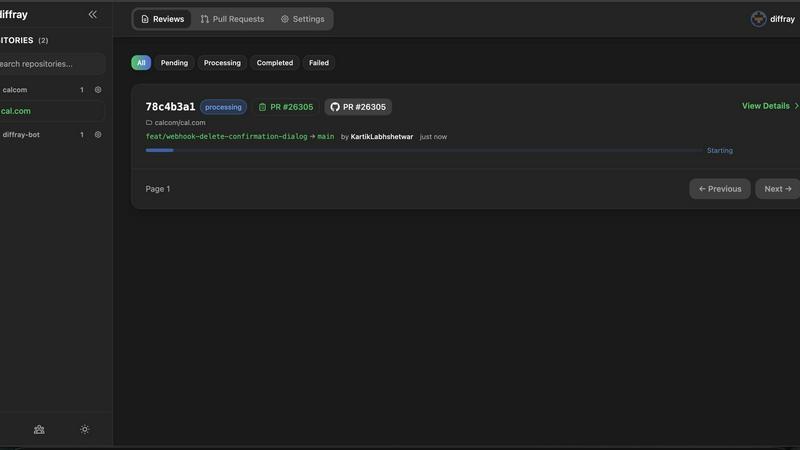
diffray
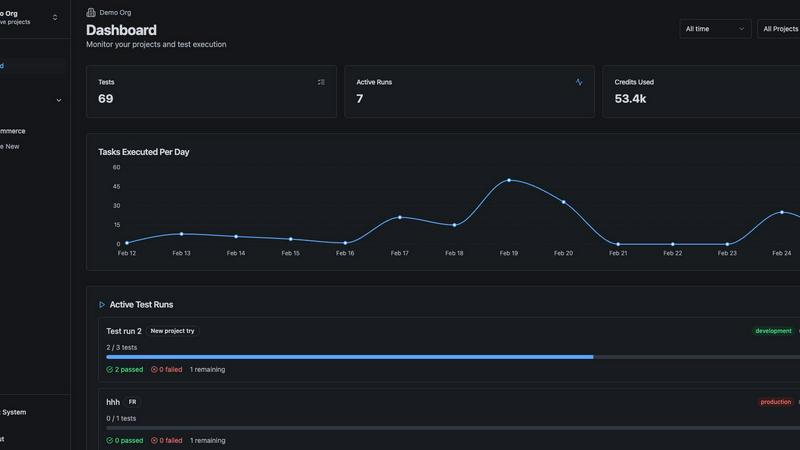
qtrl.ai
Feature Comparison
diffray
Multi-Agent Specialized Architecture
At the core of diffray is its revolutionary multi-agent system, featuring over 30 AI agents, each trained for a specific review discipline. Instead of one model trying to do everything, you have a dedicated security agent scanning for vulnerabilities like SQL injection, a performance agent identifying inefficient loops or memory leaks, a bug-detection agent catching logical errors, and many more. This specialization ensures deep, contextual analysis that generic tools miss, leading to far more relevant and accurate feedback on every pull request.
Drastically Reduced False Positives
One of the biggest frustrations with automated code review is noise—irrelevant or incorrect suggestions that developers must sift through. diffray's targeted agent system is precision-engineered to minimize this noise. By applying domain-specific rules and context-aware analysis, it filters out irrelevant alerts. This results in an approximately 87% reduction in false positives compared to conventional tools, ensuring that developers can trust the feedback they receive and focus their energy on fixing genuine issues.
Comprehensive Issue Detection
While reducing noise, diffray simultaneously increases signal strength. Its ensemble of specialized agents works in concert to examine code from every critical angle. This comprehensive scrutiny leads to a threefold increase in the detection of real, substantive issues—from subtle security flaws and performance bottlenecks to deviations from best practices and potential bugs that would otherwise reach production. It acts like an entire expert review panel automated into your workflow.
Seamless CI/CD Integration
diffray is built for the modern developer workflow and integrates directly into the tools teams already use. It connects natively with GitHub and GitLab, posting detailed, agent-categorized comments directly onto pull requests. This seamless integration requires no change in developer habit; reviews happen automatically on every PR, providing instant, actionable insights within the existing development environment and continuous integration/continuous delivery (CI/CD) pipeline.
qtrl.ai
Enterprise-Grade Test Management
qtrl provides a centralized, structured foundation for all QA activities. Teams can create and organize test cases, plan comprehensive test runs, and establish full traceability from requirements to test coverage. Real-time dashboards offer clear visibility into quality metrics, showing exactly what has been tested, pass/fail statuses, and potential risk areas. This manual and automated workflow management is built with compliance and auditability as first principles, ensuring teams never lose oversight.
Progressive AI & Autonomous QA Agents
Instead of a risky "black-box" AI takeover, qtrl introduces intelligent automation progressively. Teams begin by writing high-level test instructions in plain English, which qtrl's agents execute precisely. As trust builds, teams can leverage AI to generate full test scripts from descriptions and maintain them as the application evolves. These autonomous agents operate within defined rules, executing tests on-demand or continuously across multiple environments at scale, using real browsers—not simulations.
Adaptive Memory & Intelligent Suggestions
The platform builds a living, evolving knowledge base of your application through every interaction—exploration, test execution, and issue discovery. This Adaptive Memory powers context-aware test generation that becomes more effective over time. Furthermore, qtrl proactively analyzes coverage gaps and suggests new tests to fill them, transforming the QA process from reactive maintenance to intelligent, continuous quality improvement.
Governance by Design & Multi-Environment Execution
qtrl is built for enterprise trust, with transparency and control embedded in its architecture. It offers permissioned autonomy levels, full visibility into agent actions, and enterprise-ready security. For execution, it supports running tests across any environment (dev, staging, production) with per-environment variables and encrypted secrets. Critically, these secrets are never exposed to the AI agent, ensuring security is never compromised for the sake of automation.
Use Cases
diffray
Accelerating Enterprise Development Cycles
Large development teams working on complex applications face immense pressure to release features quickly without compromising quality. Manual reviews become a major bottleneck. diffray integrates into their enterprise GitHub/GitLab setup, providing instant, expert-level preliminary reviews on every PR. This slashes the initial review time, allowing senior engineers to focus on architectural feedback rather than hunting for basic bugs, thereby accelerating overall development velocity and maintaining high code standards at scale.
Enhancing Security Posture for Startups
Startups and small teams often lack dedicated security expertise, making their code vulnerable to attacks. diffray acts as an always-available security expert. Its specialized security agent automatically scans every pull request for common and advanced vulnerabilities (e.g., XSS, insecure dependencies, hard-coded secrets). This proactive catch prevents security debt from accumulating and helps startups build securely from the ground up, which is crucial for trust and compliance.
Maintaining Code Quality in Fast-Growing Teams
As teams scale and onboard new developers, maintaining consistent code quality and adherence to best practices becomes challenging. diffray enforces code standards automatically. Its best-practice and style-guide agents review every PR for consistency, readability, and adherence to team conventions, acting as a tireless mentor for new hires and a consistency check for everyone. This ensures the codebase remains clean, maintainable, and scalable as the team grows.
Reducing Bug Escape to Production
Even with thorough testing, subtle logical bugs and edge cases can escape into production, causing outages and user dissatisfaction. diffray’s bug-detection and logic-analysis agents scrutinize code changes for these hard-to-find issues—like race conditions, null pointer exceptions, or incorrect boundary conditions. By catching them at the PR stage, it significantly reduces bug escape rates, leading to more stable releases and less firefighting for the engineering team.
qtrl.ai
Scaling Beyond Manual Testing
QA teams overwhelmed by repetitive manual test cycles can use qtrl to systematically scale their efforts. They start by structuring their existing manual cases in the test management hub for better visibility. Then, they progressively automate the most tedious, high-value UI workflows using plain English instructions, freeing up human testers for more complex exploratory work and significantly accelerating release cycles without a steep learning curve.
Modernizing Legacy QA Workflows
Companies relying on outdated, siloed, or script-heavy automation frameworks can modernize without a disruptive rip-and-replace project. qtrl integrates with existing tools and CI/CD pipelines, allowing teams to bring their current processes into a centralized platform. They can then incrementally augment or replace brittle scripts with AI-generated tests that are easier to create and maintain, building a more resilient and efficient QA ecosystem over time.
Governing Enterprise AI Testing
For large organizations in regulated industries that require strict compliance, audit trails, and governance, qtrl provides a safe path to AI adoption. Its permissioned autonomy, full audit logs of all agent activities, and "no black-box" policy ensure that AI augments the QA process without introducing unpredictable risk. Engineering leads can grant automation capabilities while retaining ultimate approval and control over what tests run and what changes are made.
Empowering Product-Led Engineering Teams
Product-focused engineering teams that need to move fast but maintain high quality can embed qtrl into their development lifecycle. Developers can write high-level test instructions for new features, and qtrl handles the execution, providing immediate feedback. The platform's coverage analysis and test suggestions help ensure no regression is introduced, enabling faster, more confident deployments aligned with a product-led growth strategy.
Overview
About diffray
In the fast-paced world of software development, code reviews are a critical bottleneck. Teams struggle with lengthy review cycles, generic feedback that misses critical issues, and an overwhelming number of false positives that waste developer time and erode trust in automated tools. This inefficiency slows down releases and risks letting bugs, security flaws, and performance issues slip into production. diffray is engineered to solve this exact problem. It is an advanced, AI-powered code review assistant that transforms pull request (PR) analysis from a tedious, error-prone task into a swift, precise, and deeply insightful process. Unlike tools that use a single, generalized AI model, diffray employs a sophisticated multi-agent architecture with over 30 specialized AI agents. Each agent is an expert in a specific domain—such as security vulnerabilities, performance anti-patterns, common bugs, language-specific best practices, and even SEO for web code. This targeted approach allows diffray to conduct a contextual, multi-faceted analysis of every code change, dramatically improving accuracy. The result is a proven 87% reduction in false positives and a 3x increase in detecting real, actionable issues. Designed for development teams of all sizes, diffray integrates seamlessly into existing GitHub and GitLab workflows, empowering teams to ship higher-quality code faster by cutting average weekly PR review time from 45 minutes to just 12 minutes per developer.
About qtrl.ai
qtrl.ai is a modern, progressive QA platform designed to solve the critical scaling challenges faced by software teams today. It bridges the frustrating gap between the slow, unscalable nature of manual testing and the brittle, expensive complexity of traditional test automation. qtrl uniquely combines robust, enterprise-grade test management with powerful, trustworthy AI automation, all within a single, governed platform. Its core value proposition is enabling teams to scale their quality assurance efforts without ever sacrificing control, visibility, or governance. Teams start with a centralized hub for organizing test cases, planning runs, tracing requirements, and tracking real-time quality metrics. From this foundation of clarity and control, they can progressively introduce intelligent automation. qtrl's autonomous agents can generate and maintain UI tests from plain English, executing them at scale across real browsers and environments. This makes it the ideal solution for product-led engineering teams, QA groups moving beyond manual processes, companies modernizing legacy workflows, and any enterprise that requires strict compliance, full audit trails, and a trusted path to faster, more intelligent quality assurance.
Frequently Asked Questions
diffray FAQ
How does diffray's multi-agent system differ from a single AI model?
A single AI model is a generalist; it has broad knowledge but lacks deep expertise in any specific area, often leading to generic or incorrect suggestions. diffray's multi-agent system is like having a team of specialists. Each of the 30+ agents is finely tuned for a specific domain (security, performance, etc.). They work together to provide a layered, context-rich analysis that is far more accurate and comprehensive, which is why we see drastically fewer false positives and many more real issues found.
What platforms and version control systems does diffray integrate with?
diffray is designed for seamless integration into modern development workflows. It currently offers direct, native integrations with GitHub and GitLab, the two most popular version control and collaboration platforms. Once installed, it automatically analyzes pull requests and merge requests, posting comments directly in the interface developers use every day, with no need for context-switching to a separate dashboard.
How does diffray achieve an 87% reduction in false positives?
This reduction is a direct result of our specialized agent architecture. Each agent uses domain-specific rules, patterns, and contextual understanding to evaluate code. For example, the security agent knows the difference between a real vulnerability and a benign code pattern that looks similar. This precision allows agents to filter out the "noise" that generic tools flag, ensuring that the vast majority of alerts raised are legitimate and actionable for the developer.
Is diffray suitable for small development teams or solo developers?
Absolutely. While diffray delivers tremendous value at scale for large teams, it is equally powerful for small teams and solo developers. It acts as an always-available peer reviewer, catching issues that a single pair of eyes might miss. For small teams, it enforces quality and security standards from the start, preventing technical debt and helping them build robust products efficiently without the need for a large, senior-led review process.
qtrl.ai FAQ
How does qtrl.ai ensure control and governance over AI actions?
qtrl is built with governance as a core design principle. It does not operate as a black box. Teams set permission levels for autonomy, and all AI-generated tests or actions are fully reviewable and require human approval before implementation. The platform provides complete visibility into every action an autonomous agent takes, maintains full audit trails for compliance, and allows teams to define the exact rules and boundaries within which the AI operates.
Can qtrl.ai integrate with our existing development tools and CI/CD pipeline?
Yes, qtrl is designed to fit into real-world engineering workflows. It offers integrations for requirements management and seamless support for CI/CD pipelines. This allows teams to trigger automated test suites as part of their build and deployment processes, enabling continuous quality feedback loops. qtrl works alongside your existing toolchain to enhance it, not replace it forcibly.
Is my application data secure, especially when using AI agents?
Absolutely. qtrl employs enterprise-grade security measures. A key feature is the secure handling of sensitive data: per-environment variables and encrypted secrets (like login credentials) are managed securely and are never exposed to the AI agents. The agents execute tests without accessing the underlying secret values, ensuring that your most sensitive data remains protected while still enabling automated testing.
What if we are not ready for full AI automation? Can we still use qtrl?
Yes, this is a fundamental strength of qtrl's progressive approach. You can start using it solely as a powerful, structured test management platform to organize manual test cases and plans. You can then introduce automation at your own pace, beginning with simple, human-written instructions for the agent to execute. The AI capabilities are there to leverage when you are ready, allowing you to start simple and scale intelligence over time.
Alternatives
diffray Alternatives
diffray is an AI-powered code review tool in the development category, designed to streamline the pull request process. It uses a multi-agent system to catch real bugs and enforce best practices with minimal false positives, aiming to significantly cut down review time and improve code quality. Users often explore alternatives for various reasons. These can include budget constraints, the need for integration with specific platforms or CI/CD pipelines, or a requirement for different feature sets like support for particular programming languages or frameworks. The search for the right tool is highly individual to a team's workflow and technical stack. When evaluating alternatives, key considerations should be the accuracy of feedback and the reduction of noise, the tool's understanding of your codebase context, and the overall impact on developer velocity. The goal is to find a solution that integrates seamlessly, provides actionable insights, and ultimately makes the review process more efficient without sacrificing depth.
qtrl.ai Alternatives
qtrl.ai is a modern QA platform in the automation and dev tools category. It helps software teams scale testing by combining structured test management with trustworthy AI agents, offering a controlled path to intelligent automation. Users often explore alternatives for various reasons. These can include budget constraints, the need for a different feature set, or specific platform requirements like deeper integration with an existing toolchain. The search for the right fit is a normal part of the software selection process. When evaluating options, consider your team's primary goals. Look for a solution that balances powerful automation with the governance and control your processes demand. The ideal platform should grow with you, providing a clear path from manual testing to scalable, AI-assisted quality assurance without becoming a black box.