Dreamflow vs Miget
Side-by-side comparison to help you choose the right tool.

Dreamflow
Dreamflow uses AI and visual tools to build production-ready mobile apps effortlessly.
Last updated: March 1, 2026

Miget
Deploy unlimited services on one flat-rate plan.
Visual Comparison
Dreamflow
Miget

Overview
About Dreamflow
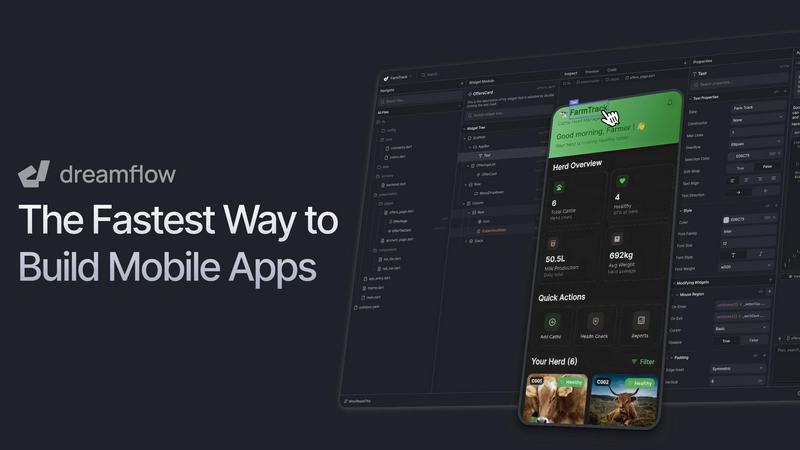
Dreamflow is a revolutionary platform that fundamentally reimagines the mobile app development process. It addresses the core challenge faced by developers and creators: the painful trade-off between speed and control. Traditionally, building a production-ready app forces you to choose between rapid, but limited, visual builders and powerful, but time-consuming, manual coding. Dreamflow eliminates this compromise by seamlessly integrating AI-driven ideation, a visual development canvas, and direct access to full, clean Flutter code. This "Tri-Surface" approach means you can start by describing your app in natural language, visually tweak the AI-generated interface, and then dive into the codebase for custom logic—all within a single, synchronized environment. Designed for solo founders, indie developers, startups, and enterprise teams alike, Dreamflow's core value proposition is delivering unparalleled velocity without sacrificing the flexibility and power needed for serious application development and deployment to the App Store, Google Play, and the web.
About Miget
Miget – Stop paying per app. Start paying per compute.
Traditional PaaS platforms charge you for every app, database, and worker separately. Miget flips that model: pick a fixed compute plan, then deploy as many services as you want inside it.
- Unlimited apps, databases, and background workers per plan
- No per-service billing surprises
- Built on Kubernetes with full isolation between tenants
- Deploy from Git, GitHub, Registry with zero-config builds
- Managed PostgreSQL, Redis, and more
- Custom domains with automatic TLS
Whether you're running a single side project or a full production stack, you only pay for the compute you reserve—not the number of things you run on it.