Fallom vs qtrl.ai
Side-by-side comparison to help you choose the right tool.

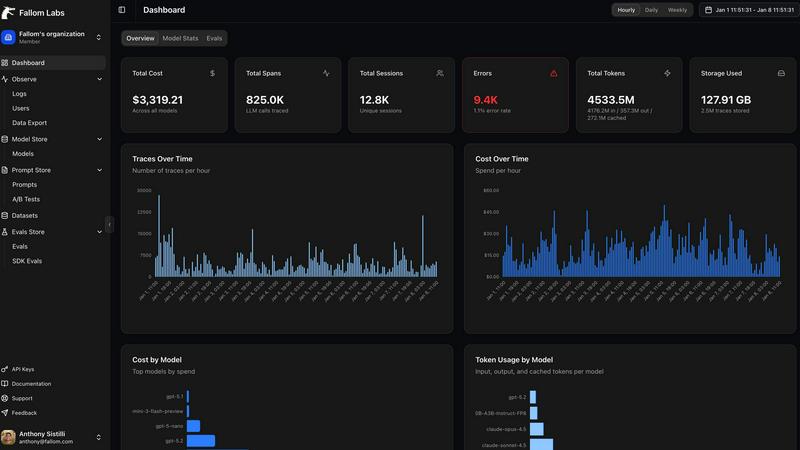
Fallom delivers real-time observability for AI agents, ensuring precise tracking, debugging, and cost management.
Last updated: February 28, 2026

qtrl.ai
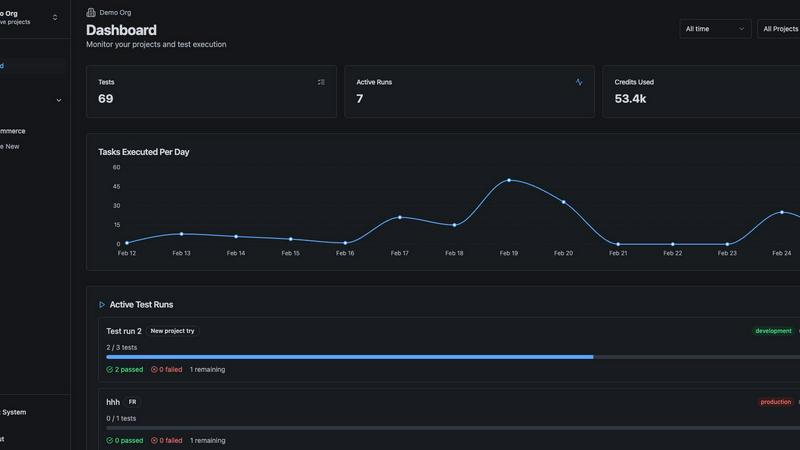
qtrl.ai scales QA testing with AI agents while ensuring full team control and governance.
Last updated: March 4, 2026
Visual Comparison
Fallom
qtrl.ai
Feature Comparison
Fallom
Comprehensive LLM Call Tracing
Fallom offers real-time observability for AI agents by enabling teams to track and analyze every LLM call. This feature allows users to debug confidently and understand the timing and costs associated with each call, enhancing overall operational efficiency.
Cost Attribution and Transparency
With Fallom, organizations can effectively track their spending across different models, users, and teams. This feature delivers full cost transparency, making budgeting and chargeback processes seamless and accurate.
Enterprise-Grade Compliance
Fallom is equipped with compliance-ready capabilities that provide complete audit trails to support regulatory requirements. Features include input/output logging, model versioning, and user consent tracking, ensuring that organizations meet standards such as GDPR and the EU AI Act.
Real-time Monitoring and Session Tracking
The platform enables live monitoring of LLM usage, allowing teams to spot anomalies before they escalate into serious incidents. Additionally, session tracking groups traces by user or customer, providing complete context for performance analysis.
qtrl.ai
Enterprise-Grade Test Management
qtrl provides a centralized, structured foundation for all QA activities. Teams can create and organize test cases, plan comprehensive test runs, and establish full traceability from requirements to test coverage. Real-time dashboards offer clear visibility into quality metrics, showing exactly what has been tested, pass/fail statuses, and potential risk areas. This manual and automated workflow management is built with compliance and auditability as first principles, ensuring teams never lose oversight.
Progressive AI & Autonomous QA Agents
Instead of a risky "black-box" AI takeover, qtrl introduces intelligent automation progressively. Teams begin by writing high-level test instructions in plain English, which qtrl's agents execute precisely. As trust builds, teams can leverage AI to generate full test scripts from descriptions and maintain them as the application evolves. These autonomous agents operate within defined rules, executing tests on-demand or continuously across multiple environments at scale, using real browsers—not simulations.
Adaptive Memory & Intelligent Suggestions
The platform builds a living, evolving knowledge base of your application through every interaction—exploration, test execution, and issue discovery. This Adaptive Memory powers context-aware test generation that becomes more effective over time. Furthermore, qtrl proactively analyzes coverage gaps and suggests new tests to fill them, transforming the QA process from reactive maintenance to intelligent, continuous quality improvement.
Governance by Design & Multi-Environment Execution
qtrl is built for enterprise trust, with transparency and control embedded in its architecture. It offers permissioned autonomy levels, full visibility into agent actions, and enterprise-ready security. For execution, it supports running tests across any environment (dev, staging, production) with per-environment variables and encrypted secrets. Critically, these secrets are never exposed to the AI agent, ensuring security is never compromised for the sake of automation.
Use Cases
Fallom
Optimizing AI Workflows
Organizations can utilize Fallom to optimize their AI workflows by analyzing LLM call data, identifying bottlenecks, and improving response times. This leads to enhanced efficiency in operations involving AI agents.
Ensuring Compliance in AI Deployments
Fallom's robust compliance features make it ideal for organizations operating in regulated industries. Businesses can maintain compliance with data protection regulations while ensuring that their AI systems are transparent and accountable.
Cost Management in AI Operations
Companies can leverage Fallom to gain insights into their LLM usage costs. By tracking expenses on a per-model and per-user basis, organizations can make informed budgeting decisions and manage their AI investments effectively.
Debugging and Performance Enhancement
Fallom's real-time monitoring capabilities allow teams to debug issues quickly and enhance the performance of their AI agents. By identifying latency problems and performance regressions, organizations can ensure a smoother user experience.
qtrl.ai
Scaling Beyond Manual Testing
QA teams overwhelmed by repetitive manual test cycles can use qtrl to systematically scale their efforts. They start by structuring their existing manual cases in the test management hub for better visibility. Then, they progressively automate the most tedious, high-value UI workflows using plain English instructions, freeing up human testers for more complex exploratory work and significantly accelerating release cycles without a steep learning curve.
Modernizing Legacy QA Workflows
Companies relying on outdated, siloed, or script-heavy automation frameworks can modernize without a disruptive rip-and-replace project. qtrl integrates with existing tools and CI/CD pipelines, allowing teams to bring their current processes into a centralized platform. They can then incrementally augment or replace brittle scripts with AI-generated tests that are easier to create and maintain, building a more resilient and efficient QA ecosystem over time.
Governing Enterprise AI Testing
For large organizations in regulated industries that require strict compliance, audit trails, and governance, qtrl provides a safe path to AI adoption. Its permissioned autonomy, full audit logs of all agent activities, and "no black-box" policy ensure that AI augments the QA process without introducing unpredictable risk. Engineering leads can grant automation capabilities while retaining ultimate approval and control over what tests run and what changes are made.
Empowering Product-Led Engineering Teams
Product-focused engineering teams that need to move fast but maintain high quality can embed qtrl into their development lifecycle. Developers can write high-level test instructions for new features, and qtrl handles the execution, providing immediate feedback. The platform's coverage analysis and test suggestions help ensure no regression is introduced, enabling faster, more confident deployments aligned with a product-led growth strategy.
Overview
About Fallom
Fallom is an innovative AI-native observability platform developed specifically for large language model (LLM) and agent workloads. It empowers organizations by providing unprecedented visibility into LLM operations, allowing users to track every LLM call in production. This visibility is achieved through comprehensive end-to-end tracing, which captures essential data points, including prompts, outputs, tool calls, tokens, latency, and per-call costs. The platform is designed for businesses that leverage AI agents, enabling them to effectively monitor and optimize their LLM usage. Fallom's deep insights into user and session-level contexts help teams understand performance metrics and usage patterns. Additionally, it meets enterprise compliance needs with features such as robust logging, model versioning, and consent tracking. With a single OpenTelemetry-native SDK, teams can instrument their applications in just minutes, facilitating live monitoring, rapid debugging, and effective cost attribution across various models, users, and teams.
About qtrl.ai
qtrl.ai is a modern, progressive QA platform designed to solve the critical scaling challenges faced by software teams today. It bridges the frustrating gap between the slow, unscalable nature of manual testing and the brittle, expensive complexity of traditional test automation. qtrl uniquely combines robust, enterprise-grade test management with powerful, trustworthy AI automation, all within a single, governed platform. Its core value proposition is enabling teams to scale their quality assurance efforts without ever sacrificing control, visibility, or governance. Teams start with a centralized hub for organizing test cases, planning runs, tracing requirements, and tracking real-time quality metrics. From this foundation of clarity and control, they can progressively introduce intelligent automation. qtrl's autonomous agents can generate and maintain UI tests from plain English, executing them at scale across real browsers and environments. This makes it the ideal solution for product-led engineering teams, QA groups moving beyond manual processes, companies modernizing legacy workflows, and any enterprise that requires strict compliance, full audit trails, and a trusted path to faster, more intelligent quality assurance.
Frequently Asked Questions
Fallom FAQ
What industries can benefit from using Fallom?
Fallom is tailored for organizations that rely on AI agents across various industries, including finance, healthcare, retail, and technology, enabling them to optimize their AI operations and ensure compliance.
How quickly can I integrate Fallom into my existing systems?
With Fallom's OpenTelemetry-native SDK, teams can set up and instrument their applications in under five minutes, allowing for rapid integration and immediate start of live monitoring.
What compliance standards does Fallom support?
Fallom is designed to meet various compliance standards, including GDPR, the EU AI Act, and SOC 2, providing organizations with the necessary tools to maintain regulatory compliance in their AI operations.
Can Fallom help with debugging AI models?
Yes, Fallom provides features that allow teams to debug their AI models efficiently. With real-time monitoring and session tracking, users can quickly identify latency issues and performance regressions, leading to improved model performance.
qtrl.ai FAQ
How does qtrl.ai ensure control and governance over AI actions?
qtrl is built with governance as a core design principle. It does not operate as a black box. Teams set permission levels for autonomy, and all AI-generated tests or actions are fully reviewable and require human approval before implementation. The platform provides complete visibility into every action an autonomous agent takes, maintains full audit trails for compliance, and allows teams to define the exact rules and boundaries within which the AI operates.
Can qtrl.ai integrate with our existing development tools and CI/CD pipeline?
Yes, qtrl is designed to fit into real-world engineering workflows. It offers integrations for requirements management and seamless support for CI/CD pipelines. This allows teams to trigger automated test suites as part of their build and deployment processes, enabling continuous quality feedback loops. qtrl works alongside your existing toolchain to enhance it, not replace it forcibly.
Is my application data secure, especially when using AI agents?
Absolutely. qtrl employs enterprise-grade security measures. A key feature is the secure handling of sensitive data: per-environment variables and encrypted secrets (like login credentials) are managed securely and are never exposed to the AI agents. The agents execute tests without accessing the underlying secret values, ensuring that your most sensitive data remains protected while still enabling automated testing.
What if we are not ready for full AI automation? Can we still use qtrl?
Yes, this is a fundamental strength of qtrl's progressive approach. You can start using it solely as a powerful, structured test management platform to organize manual test cases and plans. You can then introduce automation at your own pace, beginning with simple, human-written instructions for the agent to execute. The AI capabilities are there to leverage when you are ready, allowing you to start simple and scale intelligence over time.
Alternatives
Fallom Alternatives
Fallom is an AI-native observability platform that specializes in providing real-time tracking and insights for large language model (LLM) and agent workloads. By enabling organizations to monitor every aspect of their LLM interactions, Fallom ensures precise debugging, cost management, and compliance with regulatory standards. Given the rapid evolution of AI technologies, users often seek alternatives to Fallom for various reasons, including pricing structures, specific feature sets, or integration capabilities that better fit their unique platform needs. When searching for an alternative to Fallom, it is crucial to consider the platform's observability capabilities, ease of integration with existing systems, and the breadth of analytics provided. Additionally, organizations should evaluate how well potential alternatives can support compliance requirements and facilitate cost tracking, ensuring that they can maintain operational efficiency while managing their AI expenditures effectively.
qtrl.ai Alternatives
qtrl.ai is a modern QA platform in the automation and dev tools category. It helps software teams scale testing by combining structured test management with trustworthy AI agents, offering a controlled path to intelligent automation. Users often explore alternatives for various reasons. These can include budget constraints, the need for a different feature set, or specific platform requirements like deeper integration with an existing toolchain. The search for the right fit is a normal part of the software selection process. When evaluating options, consider your team's primary goals. Look for a solution that balances powerful automation with the governance and control your processes demand. The ideal platform should grow with you, providing a clear path from manual testing to scalable, AI-assisted quality assurance without becoming a black box.