Mediasaur vs Video Database
Side-by-side comparison to help you choose the right tool.

Mediasaur
Mediasaur helps brands effortlessly transform existing images and videos into captivating visuals and user-generated.
Last updated: March 1, 2026

Video Database
Monitors and organizes high-value creator videos.
Visual Comparison
Mediasaur

Video Database
Overview
About Mediasaur
Mediasaur is an innovative AI-powered creative engine that is set to transform the visual content creation landscape. By requiring just a single input—whether it is a product photo, a conceptual idea, or a straightforward prompt—Mediasaur generates high-quality visuals in seconds. This tool is specifically designed for marketers, designers, founders, content creators, and teams who are eager to produce diverse and compelling content quickly and efficiently. Mediasaur removes the traditional complexities and high costs associated with content production, enabling users to create a wide range of visual assets including user-generated content (UGC), professional-grade product shots, lifestyle imagery, and ads optimized for various platforms. The platform fosters creative exploration by allowing for unlimited variations, ensuring that your content pipeline remains vibrant and engaging. With a user-friendly workspace, individuals can easily organize their work, experiment with different styles, and export assets tailored for any application or channel. Whether you require polished images for a marketing initiative or quick visuals for social media, Mediasaur delivers a rapid, flexible, and AI-enhanced solution to satisfy your visual content demands.
About Video Database
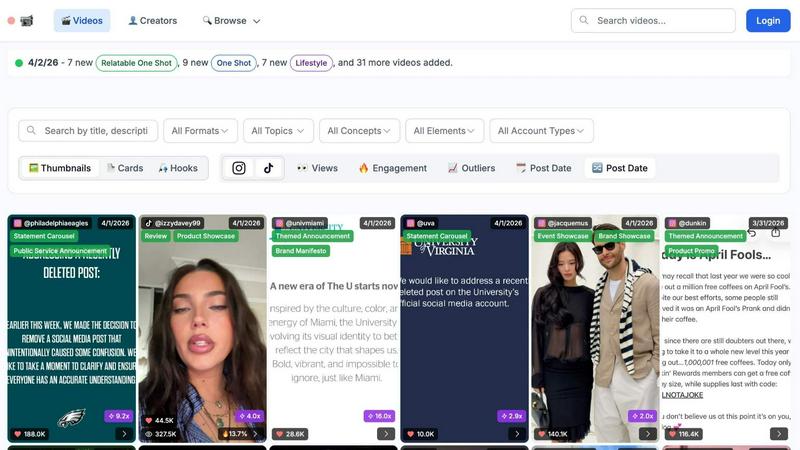
The Video Database began as an internal solution to a common frustration: as creators and content strategists we need to "study the best," but this typically means endless scrolling through social platforms riding the algo waves - good or bad. Nobody needs more of that.
Cut30, our short-form video bootcamp, maintains hundreds of hand-curated reference videos throughout its curriculum—valuable examples embedded within tutorials, exercises, and lessons. However, these references were scattered across the platform without centralized organization or analysis. What started as simply organizing and categorizing those videos, was a slippery slope.