Mod vs qtrl.ai
Side-by-side comparison to help you choose the right tool.

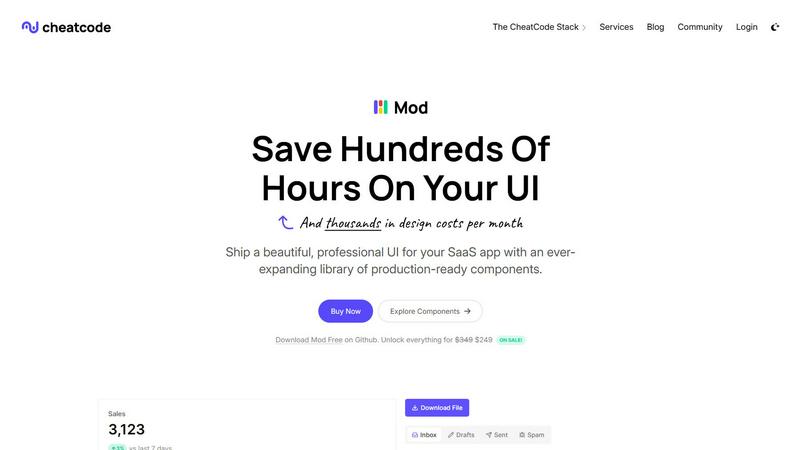
Mod accelerates SaaS development with a robust CSS framework and extensive UI components for rapid deployment.

qtrl.ai
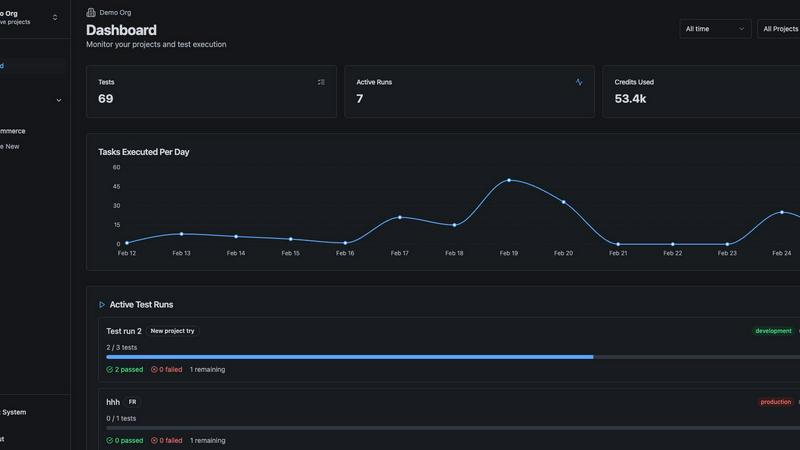
qtrl.ai scales QA testing with AI agents while ensuring full team control and governance.
Last updated: March 4, 2026
Visual Comparison
Mod
qtrl.ai
Feature Comparison
Mod
Comprehensive Component Library
Mod boasts over 88 pre-built components, ranging from buttons and forms to modals and navigation bars. This extensive library enables developers to quickly assemble their user interfaces without needing to design elements from scratch, saving valuable time and effort.
Customizable Styles
With 168 unique styles available, Mod allows developers to easily customize the appearance of their components. This flexibility means that teams can maintain their brand identity while ensuring a consistent look and feel across their applications.
Dark Mode Support
In today’s digital landscape, dark mode is a sought-after feature among users. Mod includes built-in dark mode capabilities, enabling developers to offer their applications in both light and dark themes, enhancing user comfort and accessibility.
Responsive and Mobile-First Design
Mod is designed with a mobile-first approach, ensuring that all components are responsive and adapt seamlessly to various screen sizes. This feature is crucial for providing an optimal user experience across devices, from smartphones to desktops.
qtrl.ai
Enterprise-Grade Test Management
qtrl provides a centralized, structured foundation for all QA activities. Teams can create and organize test cases, plan comprehensive test runs, and establish full traceability from requirements to test coverage. Real-time dashboards offer clear visibility into quality metrics, showing exactly what has been tested, pass/fail statuses, and potential risk areas. This manual and automated workflow management is built with compliance and auditability as first principles, ensuring teams never lose oversight.
Progressive AI & Autonomous QA Agents
Instead of a risky "black-box" AI takeover, qtrl introduces intelligent automation progressively. Teams begin by writing high-level test instructions in plain English, which qtrl's agents execute precisely. As trust builds, teams can leverage AI to generate full test scripts from descriptions and maintain them as the application evolves. These autonomous agents operate within defined rules, executing tests on-demand or continuously across multiple environments at scale, using real browsers—not simulations.
Adaptive Memory & Intelligent Suggestions
The platform builds a living, evolving knowledge base of your application through every interaction—exploration, test execution, and issue discovery. This Adaptive Memory powers context-aware test generation that becomes more effective over time. Furthermore, qtrl proactively analyzes coverage gaps and suggests new tests to fill them, transforming the QA process from reactive maintenance to intelligent, continuous quality improvement.
Governance by Design & Multi-Environment Execution
qtrl is built for enterprise trust, with transparency and control embedded in its architecture. It offers permissioned autonomy levels, full visibility into agent actions, and enterprise-ready security. For execution, it supports running tests across any environment (dev, staging, production) with per-environment variables and encrypted secrets. Critically, these secrets are never exposed to the AI agent, ensuring security is never compromised for the sake of automation.
Use Cases
Mod
Rapid Prototyping
Mod is ideal for rapid prototyping of SaaS applications, allowing developers to quickly create functional and visually appealing interfaces. This speed helps teams gather user feedback earlier in the development process, leading to more effective iterations.
Startups and MVP Development
For startups looking to launch Minimum Viable Products (MVPs), Mod provides the essential tools to build a professional-looking application without incurring high design costs. This capability is vital for attracting early adopters and investors.
Custom SaaS Solutions
Development teams can leverage Mod to create tailored SaaS solutions for their clients. With its extensive component library and customizable styles, it enables the creation of unique applications that meet specific business needs.
Cross-Framework Compatibility
Mod's framework-agnostic nature makes it an excellent choice for teams working with multiple technologies. Whether using JavaScript frameworks or backend systems, developers can integrate Mod seamlessly, improving collaboration and efficiency.
qtrl.ai
Scaling Beyond Manual Testing
QA teams overwhelmed by repetitive manual test cycles can use qtrl to systematically scale their efforts. They start by structuring their existing manual cases in the test management hub for better visibility. Then, they progressively automate the most tedious, high-value UI workflows using plain English instructions, freeing up human testers for more complex exploratory work and significantly accelerating release cycles without a steep learning curve.
Modernizing Legacy QA Workflows
Companies relying on outdated, siloed, or script-heavy automation frameworks can modernize without a disruptive rip-and-replace project. qtrl integrates with existing tools and CI/CD pipelines, allowing teams to bring their current processes into a centralized platform. They can then incrementally augment or replace brittle scripts with AI-generated tests that are easier to create and maintain, building a more resilient and efficient QA ecosystem over time.
Governing Enterprise AI Testing
For large organizations in regulated industries that require strict compliance, audit trails, and governance, qtrl provides a safe path to AI adoption. Its permissioned autonomy, full audit logs of all agent activities, and "no black-box" policy ensure that AI augments the QA process without introducing unpredictable risk. Engineering leads can grant automation capabilities while retaining ultimate approval and control over what tests run and what changes are made.
Empowering Product-Led Engineering Teams
Product-focused engineering teams that need to move fast but maintain high quality can embed qtrl into their development lifecycle. Developers can write high-level test instructions for new features, and qtrl handles the execution, providing immediate feedback. The platform's coverage analysis and test suggestions help ensure no regression is introduced, enabling faster, more confident deployments aligned with a product-led growth strategy.
Overview
About Mod
Mod is an innovative CSS framework specifically designed for Software as a Service (SaaS) user interfaces. It provides developers with a comprehensive toolkit that includes over 88 pre-built components, 168 unique styles, and 1,500+ icons, all aimed at streamlining the process of building visually appealing and responsive web applications. As a framework-agnostic solution, Mod seamlessly integrates with popular JavaScript frameworks such as Next.js, Nuxt, Vite, Svelte, as well as backend frameworks like Rails and Django. This versatility allows both solo developers and teams to leverage Mod's capabilities without being tied to a specific technology stack. By offering dark mode support and a mobile-first design approach, Mod ensures that applications not only look great on any device but also enhance user experience. With simple pricing and regular yearly updates, Mod empowers developers to ship their applications faster, significantly reduce design costs, and create polished, professional SaaS products that stand out in the competitive market.
About qtrl.ai
qtrl.ai is a modern, progressive QA platform designed to solve the critical scaling challenges faced by software teams today. It bridges the frustrating gap between the slow, unscalable nature of manual testing and the brittle, expensive complexity of traditional test automation. qtrl uniquely combines robust, enterprise-grade test management with powerful, trustworthy AI automation, all within a single, governed platform. Its core value proposition is enabling teams to scale their quality assurance efforts without ever sacrificing control, visibility, or governance. Teams start with a centralized hub for organizing test cases, planning runs, tracing requirements, and tracking real-time quality metrics. From this foundation of clarity and control, they can progressively introduce intelligent automation. qtrl's autonomous agents can generate and maintain UI tests from plain English, executing them at scale across real browsers and environments. This makes it the ideal solution for product-led engineering teams, QA groups moving beyond manual processes, companies modernizing legacy workflows, and any enterprise that requires strict compliance, full audit trails, and a trusted path to faster, more intelligent quality assurance.
Frequently Asked Questions
Mod FAQ
What is Mod primarily used for?
Mod is primarily used for building user interfaces for Software as a Service (SaaS) applications. It provides developers with a comprehensive set of tools to create responsive and visually appealing designs.
Can Mod be integrated with any JavaScript framework?
Yes, Mod is framework-agnostic and can be integrated with a variety of JavaScript frameworks such as Next.js, Nuxt, and Vite, as well as backend frameworks like Rails and Django.
Is there support for dark mode in Mod?
Absolutely! Mod includes built-in support for dark mode, allowing developers to easily implement this popular feature in their applications and enhance user experience.
How often does Mod receive updates?
Mod offers yearly updates to ensure that developers have access to the latest features and improvements. This commitment to regular updates helps teams stay competitive and efficient in their development processes.
qtrl.ai FAQ
How does qtrl.ai ensure control and governance over AI actions?
qtrl is built with governance as a core design principle. It does not operate as a black box. Teams set permission levels for autonomy, and all AI-generated tests or actions are fully reviewable and require human approval before implementation. The platform provides complete visibility into every action an autonomous agent takes, maintains full audit trails for compliance, and allows teams to define the exact rules and boundaries within which the AI operates.
Can qtrl.ai integrate with our existing development tools and CI/CD pipeline?
Yes, qtrl is designed to fit into real-world engineering workflows. It offers integrations for requirements management and seamless support for CI/CD pipelines. This allows teams to trigger automated test suites as part of their build and deployment processes, enabling continuous quality feedback loops. qtrl works alongside your existing toolchain to enhance it, not replace it forcibly.
Is my application data secure, especially when using AI agents?
Absolutely. qtrl employs enterprise-grade security measures. A key feature is the secure handling of sensitive data: per-environment variables and encrypted secrets (like login credentials) are managed securely and are never exposed to the AI agents. The agents execute tests without accessing the underlying secret values, ensuring that your most sensitive data remains protected while still enabling automated testing.
What if we are not ready for full AI automation? Can we still use qtrl?
Yes, this is a fundamental strength of qtrl's progressive approach. You can start using it solely as a powerful, structured test management platform to organize manual test cases and plans. You can then introduce automation at your own pace, beginning with simple, human-written instructions for the agent to execute. The AI capabilities are there to leverage when you are ready, allowing you to start simple and scale intelligence over time.