Mod vs Requestly
Side-by-side comparison to help you choose the right tool.

Mod accelerates SaaS development with a robust CSS framework and extensive UI components for rapid deployment.

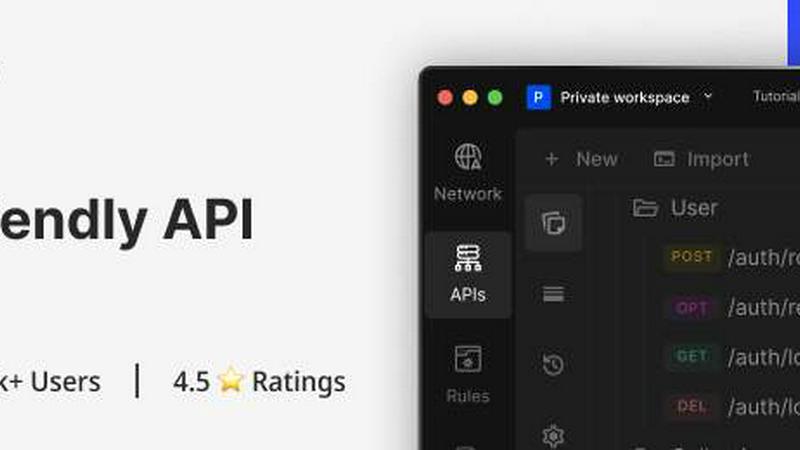
Requestly is a lightweight, git-based API client that requires no login and lets you switch from Postman in one click.
Last updated: April 4, 2026
Visual Comparison
Mod

Requestly
Feature Comparison
Mod
Comprehensive Component Library
Mod boasts over 88 pre-built components, ranging from buttons and forms to modals and navigation bars. This extensive library enables developers to quickly assemble their user interfaces without needing to design elements from scratch, saving valuable time and effort.
Customizable Styles
With 168 unique styles available, Mod allows developers to easily customize the appearance of their components. This flexibility means that teams can maintain their brand identity while ensuring a consistent look and feel across their applications.
Dark Mode Support
In today’s digital landscape, dark mode is a sought-after feature among users. Mod includes built-in dark mode capabilities, enabling developers to offer their applications in both light and dark themes, enhancing user comfort and accessibility.
Responsive and Mobile-First Design
Mod is designed with a mobile-first approach, ensuring that all components are responsive and adapt seamlessly to various screen sizes. This feature is crucial for providing an optimal user experience across devices, from smartphones to desktops.
Requestly
Git-Native API Collections
Requestly solves the problem of versioning and collaborating on API collections by storing them as local files. This allows you to use Git for version control, branching, merging, and code reviews just like you do with your source code. Your collections are no longer locked in a proprietary cloud; they are portable, auditable, and integrate perfectly into your existing CI/CD and development workflows, ensuring every change is tracked and team collaboration is seamless and transparent.
No-Login, Local-First Architecture
Tired of mandatory accounts and worrying about where your sensitive API data is stored? Requestly's core philosophy is local-first operation. You can download and start using it immediately without creating an account. All your workspaces, requests, and environment variables are stored securely on your local machine, giving you complete ownership and control over your data. This approach eliminates the security risks and privacy concerns associated with cloud-synced data by default.
AI-Powered API Development
Requestly integrates AI directly into the API workflow to tackle the tedious parts of development. The AI can assist in crafting complex requests, generating comprehensive test cases from responses, and explaining errors to speed up debugging. This transforms the API client from a simple testing tool into an intelligent development partner that helps you write better tests, understand issues faster, and improve the overall quality and reliability of your API integrations.
Free Team Collaboration & RBAC
Unlike many tools that lock collaboration behind a paywall, Requestly offers powerful team features for free. You can create shared workspaces, invite teammates, and collaborate on API collections in real time. It includes enterprise-grade Role-Based Access Control (RBAC), allowing you to assign Admin, Editor, or Viewer roles to team members with precision. This enables secure and scalable teamwork, making it ideal for both small projects and large organizational structures without unexpected costs.
Use Cases
Mod
Rapid Prototyping
Mod is ideal for rapid prototyping of SaaS applications, allowing developers to quickly create functional and visually appealing interfaces. This speed helps teams gather user feedback earlier in the development process, leading to more effective iterations.
Startups and MVP Development
For startups looking to launch Minimum Viable Products (MVPs), Mod provides the essential tools to build a professional-looking application without incurring high design costs. This capability is vital for attracting early adopters and investors.
Custom SaaS Solutions
Development teams can leverage Mod to create tailored SaaS solutions for their clients. With its extensive component library and customizable styles, it enables the creation of unique applications that meet specific business needs.
Cross-Framework Compatibility
Mod's framework-agnostic nature makes it an excellent choice for teams working with multiple technologies. Whether using JavaScript frameworks or backend systems, developers can integrate Mod seamlessly, improving collaboration and efficiency.
Requestly
Migrating from Bloated API Clients
Development teams frustrated with slow, feature-bloated, and login-mandatory API clients like Postman can seamlessly switch to Requestly. With a one-click import for Postman collections and environments, teams can migrate their entire workflow without losing history or configuration. They immediately gain a faster, more responsive tool that respects their privacy, reduces friction, and integrates natively with their developer toolkit, all while maintaining full control over their API assets.
Secure Enterprise API Development
For enterprises in regulated industries or with strict data sovereignty requirements, Requestly's local-first and Git-native approach is a game-changer. Security and compliance teams can rest assured that sensitive API data, including authentication tokens and payloads, never leaves the corporate network unless explicitly committed to a company-controlled Git repository. Features like SOC-II compliance, SSO integration, and detailed audit logs make it an enterprise-ready solution that doesn't sacrifice developer experience for security.
CI/CD Integrated API Testing
DevOps and QA engineers can integrate Requestly collections directly into their continuous integration pipelines. Since collections are stored as files in Git, they can be versioned alongside the application code. Teams can write pre/post-scripts to automate complex testing scenarios and use the collection runner to execute a suite of API tests as part of the build process. This ensures APIs are validated automatically with every code change, improving reliability and enabling true shift-left testing practices.
Collaborative API Design & Documentation
API architects and development teams can use Requestly as a collaborative hub for designing and documenting APIs. Teams can work together in shared workspaces to prototype REST and GraphQL endpoints, define environment variables for different stages, and use pre-request scripts to automate authentication. The resulting collection serves as both executable tests and living documentation that is always in sync with the actual API behavior because it's maintained and versioned with the codebase itself.
Overview
About Mod
Mod is an innovative CSS framework specifically designed for Software as a Service (SaaS) user interfaces. It provides developers with a comprehensive toolkit that includes over 88 pre-built components, 168 unique styles, and 1,500+ icons, all aimed at streamlining the process of building visually appealing and responsive web applications. As a framework-agnostic solution, Mod seamlessly integrates with popular JavaScript frameworks such as Next.js, Nuxt, Vite, Svelte, as well as backend frameworks like Rails and Django. This versatility allows both solo developers and teams to leverage Mod's capabilities without being tied to a specific technology stack. By offering dark mode support and a mobile-first design approach, Mod ensures that applications not only look great on any device but also enhance user experience. With simple pricing and regular yearly updates, Mod empowers developers to ship their applications faster, significantly reduce design costs, and create polished, professional SaaS products that stand out in the competitive market.
About Requestly
Requestly is a modern, lightweight API client built from the ground up for developers and teams who are frustrated by the bloat, mandatory logins, and lack of control found in traditional cloud-based tools. It directly addresses the core challenges of modern API development: maintaining security, enabling true developer-friendly collaboration, and accelerating workflows without compromise. At its heart, Requestly operates on a local-first principle, meaning all your API collections, environments, and data are stored as files on your own machine. This fundamental choice ensures unparalleled data privacy and security while seamlessly integrating with version control systems like Git, allowing teams to manage and collaborate on API collections with the same workflows they use for code. Enhanced with integrated AI capabilities, Requestly streamlines request creation, test generation, and debugging. It supports both REST and GraphQL with powerful features like schema introspection, pre/post-request scripts, and environment variables. With no sign-up required to start and robust free-tier collaboration features including shared workspaces and role-based access control, Requestly empowers over 300,000 developers from companies like Microsoft, Amazon, and Google to build and test APIs faster, smarter, and with full control.
Frequently Asked Questions
Mod FAQ
What is Mod primarily used for?
Mod is primarily used for building user interfaces for Software as a Service (SaaS) applications. It provides developers with a comprehensive set of tools to create responsive and visually appealing designs.
Can Mod be integrated with any JavaScript framework?
Yes, Mod is framework-agnostic and can be integrated with a variety of JavaScript frameworks such as Next.js, Nuxt, and Vite, as well as backend frameworks like Rails and Django.
Is there support for dark mode in Mod?
Absolutely! Mod includes built-in support for dark mode, allowing developers to easily implement this popular feature in their applications and enhance user experience.
How often does Mod receive updates?
Mod offers yearly updates to ensure that developers have access to the latest features and improvements. This commitment to regular updates helps teams stay competitive and efficient in their development processes.
Requestly FAQ
How is Requestly different from Postman?
Requestly is built as a modern, lightweight alternative with a core focus on developer control and efficiency. Key differences include its local-first architecture (no mandatory cloud sync or login), Git-native collections that work with your existing version control, and free team collaboration features. It avoids the feature bloat of traditional clients, offering a faster, more focused experience that prioritizes security, privacy, and seamless integration into developer workflows without compromising on essential power features.
Is my API data secure with Requestly?
Yes, security is a foundational principle of Requestly. By operating on a local-first model, your data is stored on your machine by default, not on external servers. For collaboration, data is shared via your own Git repositories, giving you complete control over access and storage. For enterprise users, additional security measures like SOC-II compliance, data encryption, SSO, and role-based access control are provided. You own and control your data at every step.
Can I import my existing Postman collections?
Absolutely. Requestly offers a straightforward, one-click import process for Postman collections and environments. You can easily migrate your entire workspace, including variables, scripts, and request history, allowing for a seamless transition without starting from scratch. This makes switching to a more efficient and controlled API workflow quick and painless for individuals and entire teams.
Does Requestly support GraphQL APIs?
Yes, Requestly provides full-featured support for GraphQL. It includes an intelligent GraphQL client with schema introspection, which automatically fetches and understands your GraphQL schema to provide auto-completion for queries and mutations. It also supports setting custom headers and variables, making it a powerful tool for developing, testing, and debugging modern GraphQL APIs alongside your REST endpoints.