Video Database vs Vidgo API
Side-by-side comparison to help you choose the right tool.

Video Database
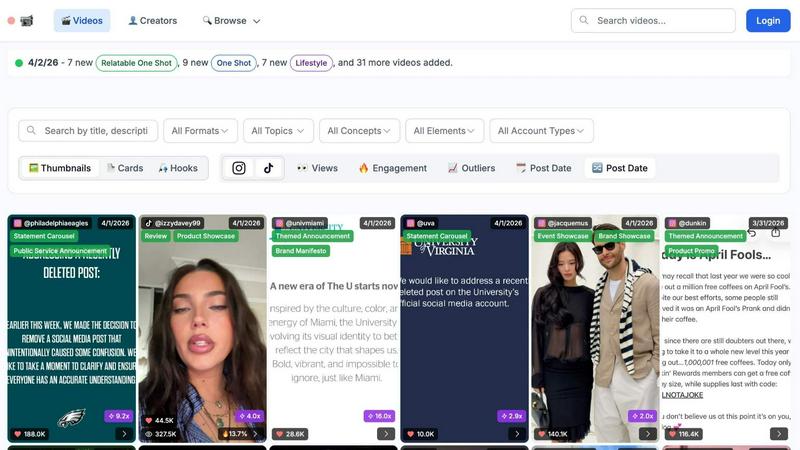
Monitors and organizes high-value creator videos.

Vidgo API
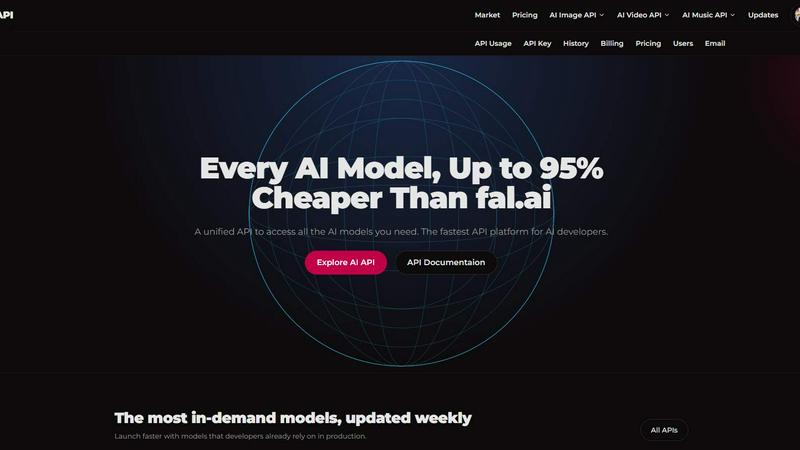
Vidgo API gives developers affordable, unified access to the top AI models for image, video, and music creation.
Last updated: February 28, 2026
Visual Comparison
Video Database
Vidgo API
Overview
About Video Database
The Video Database began as an internal solution to a common frustration: as creators and content strategists we need to "study the best," but this typically means endless scrolling through social platforms riding the algo waves - good or bad. Nobody needs more of that.
Cut30, our short-form video bootcamp, maintains hundreds of hand-curated reference videos throughout its curriculum—valuable examples embedded within tutorials, exercises, and lessons. However, these references were scattered across the platform without centralized organization or analysis. What started as simply organizing and categorizing those videos, was a slippery slope.
About Vidgo API
In today's fast-paced digital landscape, developers and businesses face a significant challenge: integrating AI media generation is often a complex, expensive, and fragmented process. Teams are forced to juggle multiple APIs, each with its own pricing, authentication, and documentation, just to create video, image, and music content. This slows down development, inflates costs, and introduces operational headaches. Vidgo API is the definitive solution to this problem. It is a unified, developer-first platform that provides a single REST API to access the world's leading AI models for video, image, and music generation. Built for app developers, content teams, and businesses of all sizes, Vidgo API consolidates the entire AI media stack into one reliable, cost-effective endpoint. Its core value proposition is unmatched affordability—offering prices 15-95% cheaper than competitors like Fal.ai—without compromising on performance or quality. With a guaranteed 99.9% uptime and an average response time of 120ms, it empowers teams to build and scale media-rich applications rapidly, turning the challenge of multi-vendor AI integration into a streamlined, predictable advantage.