AskFormulas vs Miget
Side-by-side comparison to help you choose the right tool.

AskFormulas
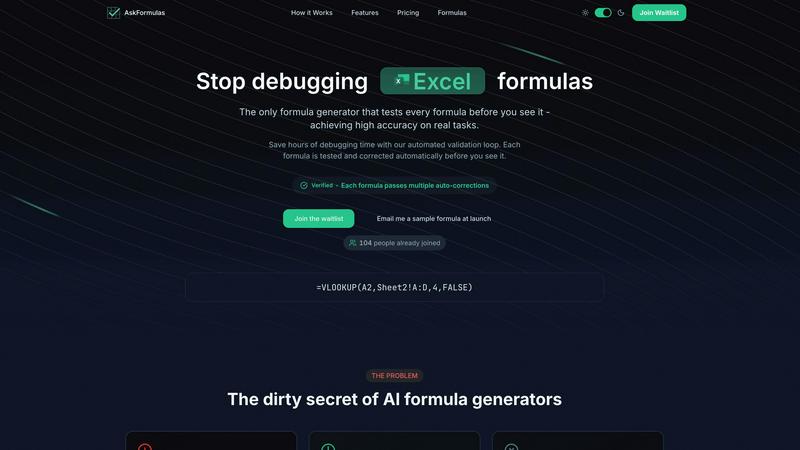
AskFormulas instantly generates and validates Excel and Sheets formulas, saving you hours of debugging time.
Last updated: February 28, 2026

Miget
Deploy unlimited services on one flat-rate plan.
Visual Comparison
AskFormulas
Miget
Overview
About AskFormulas
AskFormulas is a revolutionary tool designed to alleviate the common frustrations users face with broken Excel formulas. Unlike other AI-driven formula generators that often produce error rates between 40% and 60%, AskFormulas ensures that every generated formula is rigorously validated before being presented to users. This tool transforms natural language descriptions into accurate Excel and Google Sheets formulas, making it accessible for users without prior syntax knowledge. Whether you are a financial analyst, revenue manager, or a small business owner, AskFormulas streamlines the formula creation process, significantly enhancing productivity. By automating formula generation and incorporating a robust error correction mechanism, AskFormulas allows you to focus more on valuable data analysis rather than tedious debugging. With its user-friendly interface and high accuracy guarantee, AskFormulas is an essential resource for anyone looking to leverage the power of Excel and Google Sheets effectively.
About Miget
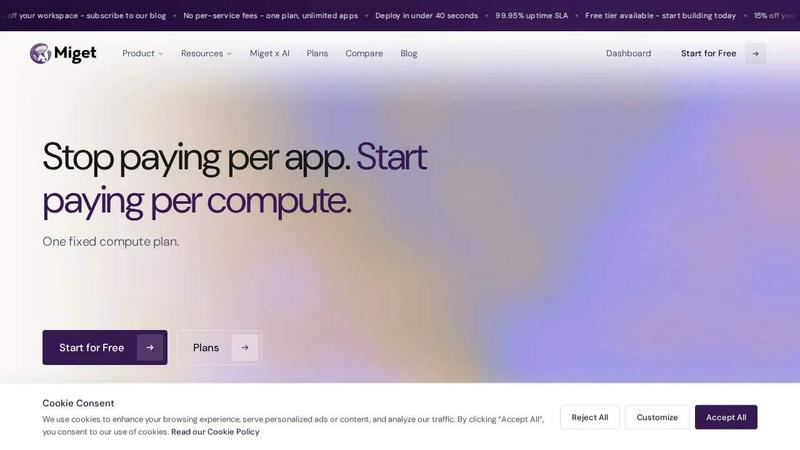
Miget – Stop paying per app. Start paying per compute.
Traditional PaaS platforms charge you for every app, database, and worker separately. Miget flips that model: pick a fixed compute plan, then deploy as many services as you want inside it.
- Unlimited apps, databases, and background workers per plan
- No per-service billing surprises
- Built on Kubernetes with full isolation between tenants
- Deploy from Git, GitHub, Registry with zero-config builds
- Managed PostgreSQL, Redis, and more
- Custom domains with automatic TLS
Whether you're running a single side project or a full production stack, you only pay for the compute you reserve—not the number of things you run on it.