
Kane AI vs Keploy
Side-by-side comparison to help you choose the right tool.

Kane AI
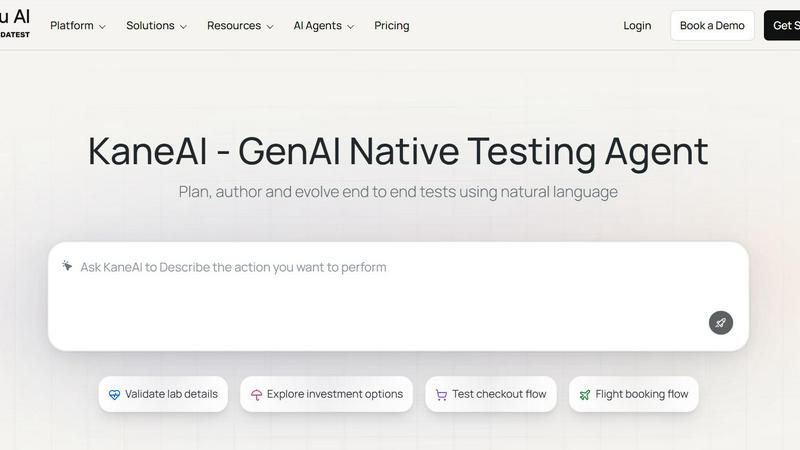
Kane AI simplifies quality engineering by enabling teams to create and evolve tests effortlessly using natural language.
Last updated: February 27, 2026

Keploy
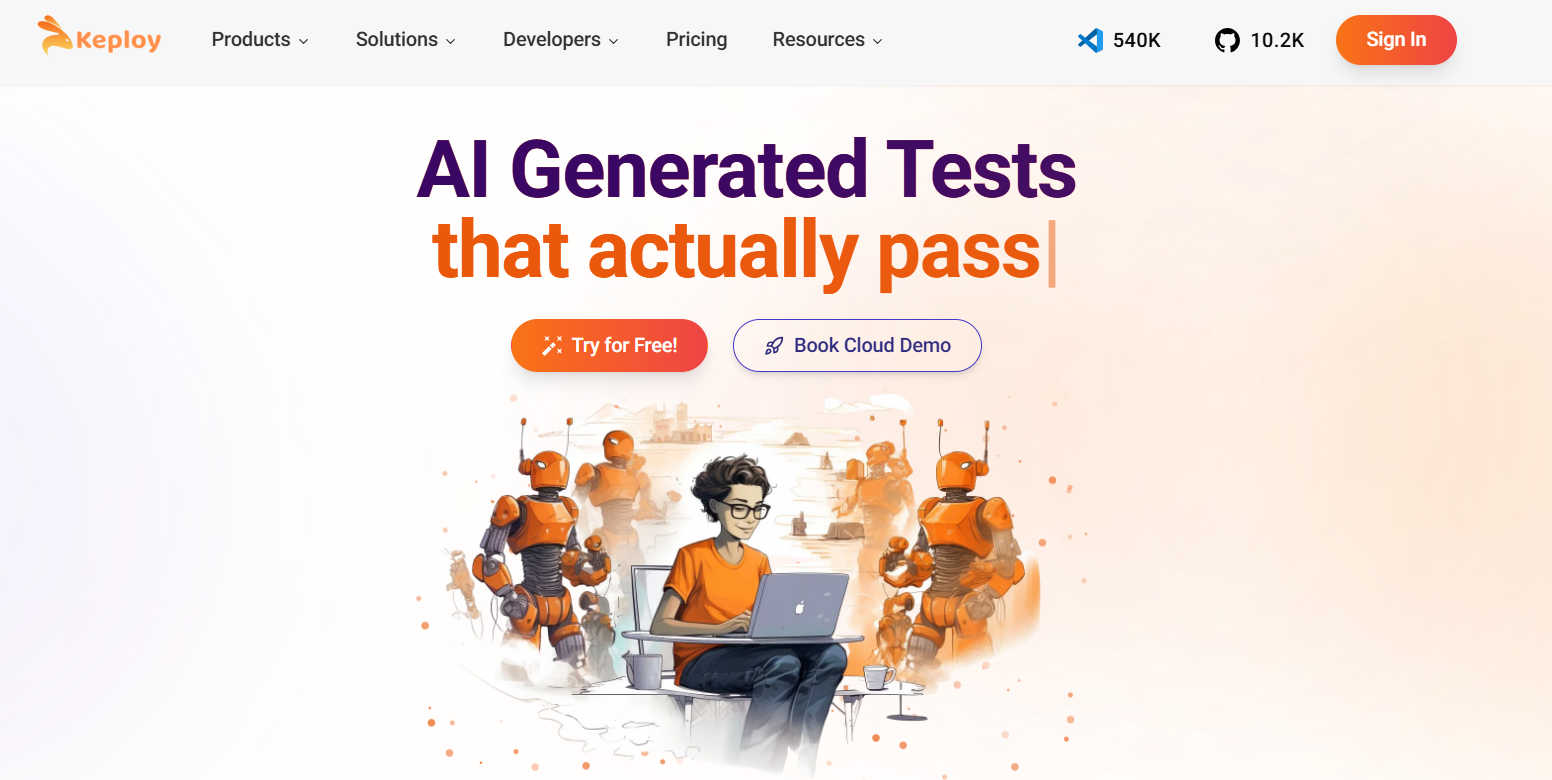
Keploy automatically creates reliable API tests from real traffic to boost your coverage in minutes.
Last updated: March 1, 2026
Visual Comparison
Kane AI
Keploy
Feature Comparison
Kane AI
Intelligent Test Generation
Kane AI leverages natural language processing to generate intelligent test cases from simple instructions, allowing users to describe their testing objectives without needing to write code. This feature streamlines the test creation process and makes it accessible to non-technical team members.
Seamless Integrations
Kane AI integrates effortlessly with popular project management tools like JIRA and Azure DevOps. This capability allows teams to create, manage, and execute test cases without leaving their existing workflows, promoting efficiency and collaboration across departments.
Comprehensive Coverage
Kane AI supports testing across various layers, including databases, APIs, and UI, ensuring no critical aspect is overlooked. This feature allows teams to validate end-to-end user flows and backend functionalities in one unified platform, enhancing overall test coverage.
Auto Bug Detection and Healing
With auto bug detection capabilities, Kane AI identifies failures during test execution and automatically suggests solutions to rectify them. This feature minimizes downtime and accelerates the debugging process, allowing teams to focus more on development rather than troubleshooting.
Keploy
AI-Powered Test & Mock Generation
Keploy's AI engine intelligently records all API calls, database queries, and external dependencies during application runtime. It then automatically transforms this traffic into executable test cases and corresponding mocks or stubs. This eliminates the need for developers to manually write complex test logic or mock definitions, ensuring tests are based on real-world usage patterns and are inherently stable and deterministic.
Record and Replay in Isolated Sandbox
The platform allows you to record API traffic directly from your live application or local environment. These recorded sessions can then be replayed in a completely isolated sandbox within your CI/CD pipeline. This isolation ensures tests are consistent, fast, and free from flakiness caused by external dependencies or shared state, providing reliable results every time the pipeline runs.
Comprehensive Coverage Reporting
Keploy provides detailed, actionable insights into your test coverage. It goes beyond simple line coverage to show which APIs, code paths, and integrations are tested. This visibility helps teams identify critical gaps in their test suites, prioritize testing efforts, and confidently measure progress toward quality goals, ensuring no regression slips through.
Performance Testing Integration
Beyond functional correctness, Keploy can leverage the recorded traffic patterns to generate performance and load tests. By simulating real-user behavior at scale, teams can identify performance bottlenecks, latency issues, and system limits early in the development cycle, enabling proactive optimization of application performance and reliability.
Use Cases
Kane AI
Automating Test Flows
Kane AI is ideal for teams looking to automate their test flows across web and mobile applications. By simply instructing Kane AI, users can generate comprehensive test cases that cover all critical user interactions, ensuring a robust testing process.
Continuous Testing in CI/CD Pipelines
Incorporating Kane AI into CI/CD pipelines allows teams to achieve continuous testing. This ensures that every code commit is validated against automated test cases, catching issues early and reducing the risk of defects in production.
API Validation Alongside UI Testing
Kane AI enables concurrent API testing with UI flows, allowing teams to validate backend services while ensuring frontend functionality. This holistic approach eliminates silos and enhances collaboration between development and QA teams.
Accessibility Testing
Kane AI includes built-in accessibility testing features, enabling teams to deliver inclusive software experiences without compromising on speed. This use case ensures compliance with accessibility standards and enhances the user experience for all customers.
Keploy
Accelerating Legacy Code Testing
For teams maintaining large, untested legacy codebases, writing a comprehensive test suite from scratch is daunting. Keploy can be attached to the running application to automatically generate a foundational test suite from real traffic, dramatically reducing the initial effort and risk associated with modernizing and refactoring legacy systems.
Ensuring Reliability in Microservices
In a microservices architecture, testing service integrations is complex and time-consuming. Keploy excels at recording inter-service communications and generating integration tests with accurate mocks for each dependency. This ensures that each service can be tested in isolation while faithfully simulating its interactions with others.
Streamlining CI/CD Pipeline Testing
Development teams can integrate Keploy into their CI/CD pipelines to automatically generate and run tests with every build. This creates a fast, automated feedback loop where any regression introduced by new code is caught immediately, significantly improving deployment confidence and speeding up release cycles.
Enhancing Developer Productivity
Developers can use Keploy during feature development to automatically create tests for new APIs as they are being built and tested manually. This shifts testing left seamlessly, embedding quality assurance into the development workflow itself and freeing developers from the tedious task of manual test creation.
Overview
About Kane AI
Kane AI by TestMu AI is a revolutionary GenAI-native testing agent specifically designed to empower high-speed Quality Engineering teams. It transforms the landscape of test automation by enabling users to author, manage, debug, and evolve tests using natural language, significantly reducing the time and expertise traditionally required. Unlike conventional low-code tools, Kane AI is capable of handling complex workflows that span across various programming languages and frameworks, all while maintaining high performance levels. Its intelligent features allow for natural language processing-based test generation, enabling teams to engage in conversations with Kane AI to automate testing tasks seamlessly. The Intelligent Test Planner further aligns automated tests with overarching business goals, ensuring that teams can focus on delivering quality products efficiently. With robust multi-language code export and sophisticated conditionals expressed in plain language, Kane AI makes test automation accessible to everyone, regardless of their technical background.
About Keploy
Keploy is an innovative, AI-powered testing platform designed to solve one of the most persistent challenges in modern software development: achieving comprehensive test coverage without the immense manual effort and time investment. It is built for developers and engineering teams who are tired of the traditional, slow, and brittle process of writing and maintaining unit, integration, and API tests. Keploy's core value proposition is its ability to automatically generate stable, high-coverage test cases and mocks by simply recording real user traffic and API calls from your running application. This means developers can shift from manually authoring tests to automatically capturing them from actual behavior, achieving up to 90% coverage in minutes, not weeks. By supporting popular languages like Go, Java, Node.js, and Python, Keploy integrates seamlessly into diverse tech stacks, allowing teams to focus on building features and improving code quality rather than getting bogged down in testing logistics. It transforms testing from a bottleneck into a seamless, automated part of the development lifecycle.
Frequently Asked Questions
Kane AI FAQ
What programming languages does Kane AI support?
Kane AI is designed to work seamlessly with all major programming languages and frameworks, making it versatile for various development environments.
How does Kane AI ensure test accuracy?
Kane AI employs natural language processing to generate test cases that align closely with user intents, minimizing errors and ensuring that tests accurately reflect the desired behavior of the application.
Can Kane AI be integrated with existing tools?
Yes, Kane AI integrates smoothly with popular tools like JIRA and Azure DevOps, enabling teams to maintain their workflows while enhancing their testing capabilities.
What types of testing does Kane AI support?
Kane AI supports a wide range of testing types, including functional testing, API testing, accessibility testing, and performance testing, providing comprehensive coverage for your applications.
Keploy FAQ
How does Keploy generate tests without writing code?
Keploy works by recording the network interactions (HTTP API calls, database queries, etc.) of your running application. Its AI engine analyzes this traffic to understand the application's behavior, request/response structures, and dependencies. It then automatically synthesizes this data into executable test cases and creates intelligent mocks for external services, all without requiring manual test script writing.
What programming languages does Keploy support?
Keploy offers broad language support to fit into diverse development environments. It currently provides dedicated support for Go, Java, Node.js (JavaScript/TypeScript), and Python. This allows development teams across different tech stacks to leverage its automated testing capabilities.
Is Keploy an open-source tool?
Yes, Keploy has a strong open-source foundation. The core Keploy engine is available as open-source software, which has garnered significant community adoption with over 15.6k stars on GitHub. The company also offers commercial cloud and enterprise solutions with additional features, support, and scalability for teams.
Can Keploy tests replace all my manually written tests?
Keploy is designed to automate the creation of the majority of your integration and API test suites, potentially covering up to 90% of your testing needs. It excels at generating tests for existing behavior and new features as you build them. However, unit tests for complex business logic or very specific edge cases might still benefit from manual authoring. Keploy aims to handle the bulk, freeing you to focus on the most critical and complex testing scenarios.
Alternatives
Kane AI Alternatives
Kane AI is a GenAI-native testing agent designed specifically for high-speed Quality Engineering teams, enabling efficient test planning, creation, and evolution through natural language interaction. As a cutting-edge AI assistant, it significantly simplifies the testing process, allowing users to automate complex workflows across various programming languages and frameworks. Users often seek alternatives to Kane AI for various reasons, including pricing concerns, specific feature requirements, or compatibility with existing platforms. When looking for an alternative, it's essential to consider factors such as ease of use, integration capabilities, support for multiple programming languages, and the overall effectiveness in improving testing efficiency.
Keploy Alternatives
Keploy is an AI-powered testing tool that automates the creation of test cases and mocks, aiming to maximize coverage with minimal manual effort. It falls into the category of AI-driven development and testing assistants, helping teams improve software quality. Users often explore alternatives to Keploy for various reasons. These can include budget constraints, specific feature requirements not fully met, compatibility with niche tech stacks, or a preference for different integration or reporting workflows. Every team's testing maturity and operational needs are unique. When evaluating an alternative, consider key factors like the depth of AI-driven test generation, ease of integration with your existing tools, the robustness of API mocking capabilities, and the clarity of reporting. The right solution should align with your team's primary challenge, whether it's reducing flaky tests, accelerating test creation, or gaining better insights into coverage.