NanoBanana2pro vs Patrivox
Side-by-side comparison to help you choose the right tool.

NanoBanana2pro
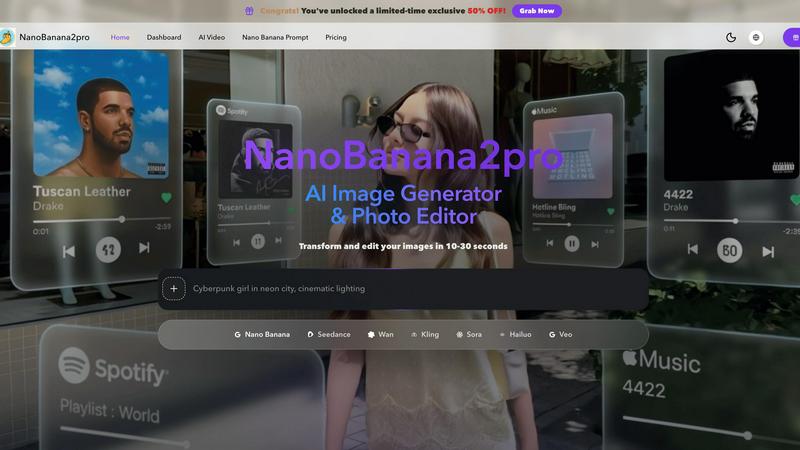
NanoBanana2pro transforms your ideas into professional, ready-to-use images and videos in seconds.
Last updated: April 4, 2026

Patrivox
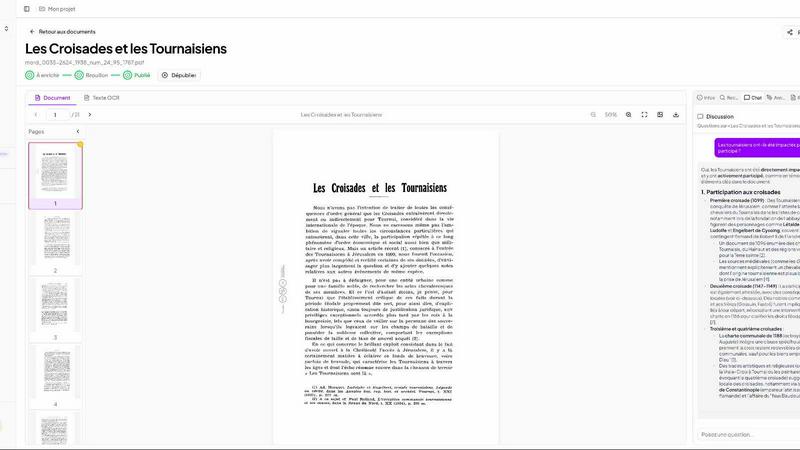
Patrivox digitizes and classifies your documents in minutes, making them fully searchable and accessible with AI.
Last updated: March 4, 2026
Visual Comparison
NanoBanana2pro
Patrivox
Feature Comparison
NanoBanana2pro
AI-Powered Image Generation & Editing
At the heart of NanoBanana2pro is its core generation engine, which converts text prompts or a single reference image into detailed, high-resolution visuals. This feature solves the problem of starting from a blank canvas by providing a clear, detailed starting point for any project. Users can describe a person, product, or scene, and the AI generates a photorealistic or stylized image that serves as a strong foundation, ready for use or further refinement, eliminating the need for rough drafts and extensive manual creation.
Style Transfer and Preset Controls
Moving beyond random output, this feature provides precise creative control. Users can apply different artistic styles, moods, and visual directions to their generated images or uploads with ease. This solves the challenge of visual inconsistency and endless guesswork, allowing for rapid exploration of multiple looks—from minimalist product shots to vibrant ad creatives—to find the exact aesthetic that aligns with brand guidelines or campaign goals, all from a single base image.
Batch Generation for A/B Testing
This feature addresses the need for options and data-driven creative decisions. With one input prompt or image, NanoBanana2pro can generate multiple variations simultaneously. This is crucial for marketing teams and creators who need to conduct visual A/B testing, explore different concepts quickly, or simply choose the strongest visual from a set of options. It streamlines the exploration phase, saving hours that would otherwise be spent on manual generation or editing of each individual variation.
Smart Assets & Reproducible Workflow
NanoBanana2pro tackles the problem of lost work and non-repeatable processes by automatically saving prompts, presets, and past generations as "Smart Assets." This creates a traceable and reusable workflow, allowing users to revisit successful projects, refine previous outputs, and maintain consistency across campaigns. Instead of restarting from zero for every new task, creators can build upon what already works, ensuring efficiency and continuous improvement in their visual production pipeline.
Patrivox
Next-Gen OCR Technology
Patrivox leverages Mistral AI's state-of-the-art optical character recognition technology to automatically read and index documents. This allows users to upload hundreds of files at once without any manual entry, ensuring efficiency and accuracy in document processing.
Interactive Knowledge Graph
Once documents are uploaded, Patrivox automatically identifies key entities such as people, places, and organizations, linking them in a dynamic knowledge graph. This feature enables users to navigate through connections, uncovering relationships and insights that might remain hidden in traditional archives.
Instant Search Functionality
With Patrivox, users can conduct full-text searches across their entire collection in less than a second. The platform supports typo tolerance, allowing users to find information quickly even with minor errors, and offers filtering options by date, author, type, and more.
AI-Powered Chat Interface
The platform includes an AI chat feature that allows users to ask questions in plain language. Patrivox responds with sourced answers, making information retrieval intuitive and user-friendly, even for those unfamiliar with the archived content.
Use Cases
NanoBanana2pro
E-commerce Product Listings & Mockups
Online sellers face the constant challenge of creating clean, attractive, and varied product imagery without the budget for endless photoshoots. NanoBanana2pro solves this by generating photorealistic product images, lifestyle shots, and contextual mockups from simple descriptions or a single product photo. This allows for rapid scaling of catalog visuals, creation of images for products that don't physically exist yet, and A/B testing of different presentation styles to boost conversion rates.
Digital Advertising & Social Media Creatives
Marketing teams are under pressure to produce a high volume of fresh, engaging ad creatives that perform. The platform enables the rapid ideation and production of multiple ad variations for A/B testing across platforms like Facebook, Instagram, and Google Ads. Users can generate compelling visuals tailored to specific audiences and campaigns in seconds, iterating on composition and style based on performance data without waiting for a designer or agency.
Brand Asset & Content Creation
Maintaining a consistent and professional visual identity across all channels is a major hurdle for brands and content creators. NanoBanana2pro assists by generating on-brand imagery for blog posts, website headers, social media content, and presentations. The style transfer and preset features ensure all outputs adhere to the brand's color palette and aesthetic, providing a steady stream of original visuals that reinforce brand recognition without licensing fees.
Prototyping & Conceptual Design
Designers and agencies often need to quickly visualize concepts for client presentations or internal brainstorming before committing to final production. NanoBanana2pro acts as a powerful ideation tool, transforming rough ideas and mood boards into tangible, high-quality visual concepts in seconds. This accelerates the feedback loop, helps secure client buy-in faster, and allows for the exploration of more creative directions within tight deadlines.
Patrivox
Municipal Archives
Local governments can utilize Patrivox to digitize historical records, deliberations, and correspondence, making them accessible to researchers and the public. This enhances transparency and promotes community engagement with local history.
Historical Societies
Patrivox is perfect for historical societies seeking to make their bulletins and documentary collections searchable. This not only preserves important documents but also allows members and the public to explore historical data easily.
Heritage Libraries
Patrivox empowers heritage libraries to open their special collections to researchers and the general public. By digitizing and indexing rare materials, libraries can enhance access to their resources and increase interest in local history.
Diocesan and Parish Archives
Religious organizations can preserve and index parish registers and ecclesiastical archives efficiently with Patrivox. This ensures that vital records are maintained and accessible for genealogical research and historical inquiries.
Overview
About NanoBanana2pro
NanoBanana2pro is a professional-grade AI image generator and photo editor designed to solve the critical bottleneck of visual content creation for businesses and creators. The core challenge it addresses is the time-consuming, expensive, and often inconsistent process of producing high-quality visuals for marketing, advertising, and e-commerce. Traditional methods involve lengthy photoshoots, costly stock photo licenses, or complex manual editing, which slows down campaigns and stifles creative iteration. NanoBanana2pro.site provides a powerful solution by enabling users to transform simple text prompts or a single reference image into high-resolution, commercially viable visuals in a matter of seconds. It is built for marketers, e-commerce store owners, advertisers, content creators, and designers who need to rapidly produce professional ad creatives, product mockups, brand assets, and multi-scene visuals without compromising on quality or control. Its main value proposition lies in its integrated workflow—combining generation, style refinement, and batch processing—to turn abstract ideas into polished, usable output faster and more cost-effectively than ever before, all while granting commercial usage rights for peace of mind.
About Patrivox
Patrivox is an innovative European SaaS platform aimed at revolutionizing the way organizations manage, access, and share their vast collections of scanned documents. Designed specifically for heritage institutions, municipal services, associations, and enterprises, Patrivox transforms physical archives into a fully searchable digital knowledge base. Users can simply drag and drop their PDF files, and within minutes, the platform employs Mistral AI's advanced optical character recognition (OCR) technology to extract every word, making it accessible to anyone. Its unique features include automatic entity recognition, natural language processing for queries, and an interactive knowledge graph that connects identified entities. Patrivox addresses the challenge of inaccessible knowledge by allowing quick information retrieval. This opens doors for research and public access, ensuring that valuable historical documents are not just preserved but made available for exploration and study.
Frequently Asked Questions
NanoBanana2pro FAQ
What kind of content does NanoBanana2pro prohibit?
NanoBanana2pro strictly prohibits the generation of adult or NSFW (Not Safe For Work) content. The platform is designed for professional and commercial creative work, and its usage policies are enforced to maintain a safe and appropriate environment for all business and marketing applications.
Can I use the images I create for commercial purposes?
Yes. A key advantage of NanoBanana2pro is that it grants commercial usage rights for content created on its platform. This means images you generate can be legally used in commercial projects, including advertisements, e-commerce listings, brand materials, and product packaging, without a complicated third-party licensing process.
How does NanoBanana2pro ensure fast generation times?
The platform leverages the newly released "Nano Banana 2" model, which is engineered to be 4x faster than its predecessor while also offering lower costs and better output quality. This architectural efficiency allows users to generate and iterate on high-resolution images in 10-30 seconds, keeping the creative workflow fluid and productive.
Is NanoBanana2pro affiliated with other AI model providers?
No. NanoBanana2pro is an independent platform with no affiliation to third-party AI model providers mentioned in its interface. It operates its own proprietary and integrated technology stack to deliver a seamless, controlled, and consistent user experience for professional image generation and editing.
Patrivox FAQ
What types of documents can I upload to Patrivox?
Patrivox supports a variety of document types, primarily focusing on PDFs. You can upload scanned files containing text, images, and other content relevant to your archives, ensuring comprehensive digitization.
How does the AI identify entities in the documents?
The AI utilizes advanced natural language processing and machine learning algorithms to recognize and classify key entities such as people, places, and organizations within the text, automatically linking them in a knowledge graph for easier navigation.
Can I share my archives with the public?
Yes, Patrivox allows for shared access to your digitized archives. You can grant unlimited readers access, making it easy for researchers, students, and the public to explore the information you have preserved.
Is Patrivox compliant with GDPR regulations?
Absolutely. Patrivox is a 100% European platform that is GDPR-native. It ensures that your data is handled in compliance with strict European regulations, providing you with peace of mind regarding data privacy and security.
Alternatives
NanoBanana2pro Alternatives
NanoBanana2pro is an AI-powered platform for creating and editing images and videos, designed to streamline content workflows for marketing and e-commerce. It falls into the category of AI content creation tools, helping users generate visuals from text prompts and reference images. Users often explore alternatives for various reasons. Some may find the pricing structure doesn't fit their budget, while others might need specific features like different export formats or more advanced editing controls. Platform compatibility, ease of use, and the need for specialized outputs like 3D models or vector graphics can also drive the search for other options. When evaluating alternatives, consider your primary use case. Look for tools that match your required output quality, support your desired workflows like batch generation or style transfer, and integrate well with your existing software stack. Also, assess the learning curve, customer support, and the transparency of pricing to ensure a good long-term fit for your projects.
Patrivox Alternatives
Patrivox is an innovative SaaS platform designed to streamline the digitization and organization of documents, primarily targeting heritage institutions, municipal services, associations, and enterprises. By leveraging advanced AI technology, Patrivox transforms scanned documents into searchable knowledge bases, making information quickly accessible to users. However, users often seek alternatives to Patrivox for various reasons, including pricing considerations, specific feature requirements, or compatibility with existing platforms. When evaluating alternatives, it's crucial to consider factors such as the quality of optical character recognition, the ability to categorize and connect data, user interface intuitiveness, and customer support services to ensure a seamless transition and optimal functionality.