Patrivox vs Vidgo API
Side-by-side comparison to help you choose the right tool.

Patrivox
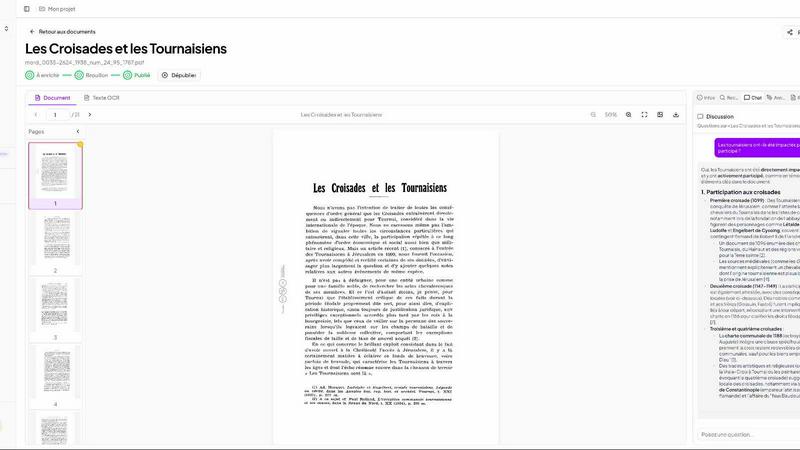
Patrivox digitizes and classifies your documents in minutes, making them fully searchable and accessible with AI.
Last updated: March 4, 2026

Vidgo API
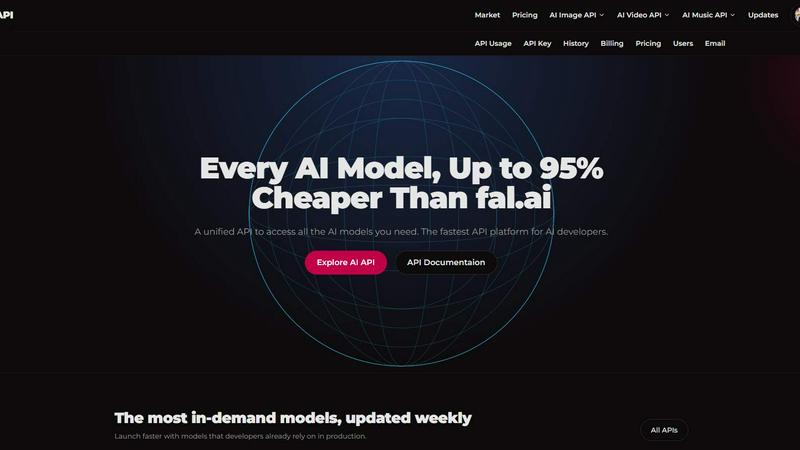
Vidgo API gives developers affordable, unified access to the top AI models for image, video, and music creation.
Last updated: February 28, 2026
Visual Comparison
Patrivox
Vidgo API
Feature Comparison
Patrivox
Next-Gen OCR Technology
Patrivox leverages Mistral AI's state-of-the-art optical character recognition technology to automatically read and index documents. This allows users to upload hundreds of files at once without any manual entry, ensuring efficiency and accuracy in document processing.
Interactive Knowledge Graph
Once documents are uploaded, Patrivox automatically identifies key entities such as people, places, and organizations, linking them in a dynamic knowledge graph. This feature enables users to navigate through connections, uncovering relationships and insights that might remain hidden in traditional archives.
Instant Search Functionality
With Patrivox, users can conduct full-text searches across their entire collection in less than a second. The platform supports typo tolerance, allowing users to find information quickly even with minor errors, and offers filtering options by date, author, type, and more.
AI-Powered Chat Interface
The platform includes an AI chat feature that allows users to ask questions in plain language. Patrivox responds with sourced answers, making information retrieval intuitive and user-friendly, even for those unfamiliar with the archived content.
Vidgo API
Unified AI Model Marketplace
Vidgo API eliminates the need to source and integrate models from disparate providers. Our platform acts as a curated marketplace, giving you instant access to top-tier models like OpenAI's Sora 2, Google's Nano Banana Pro, ByteDance's Seedream 4.5, and Suno v5 for music—all from a single dashboard. This unified access means you can pick the perfect model for each specific task—be it cinematic video, 4K images, or studio-quality audio—without managing multiple API keys, accounts, or billing systems.
Production-Grade Reliability & Speed
Building applications for real users requires infrastructure you can depend on. Vidgo API is engineered for production with a robust backend that guarantees 99.9% uptime. More than just being available, it's built for speed, delivering an average response time of just 120ms. This combination of stability and low latency ensures your applications remain responsive and your user experience is seamless, even under high load, allowing you to ship features with confidence.
Significant Cost Efficiency
One of the most pressing challenges in leveraging AI is managing unpredictable and high costs. Vidgo API directly addresses this by offering the most in-demand AI models at prices that are 15-95% cheaper than leading alternatives. This dramatic cost reduction is applied across our entire catalog, from video generation with Kling 2.6 to image creation with Nano Banana Pro. You get professional-grade results and access to cutting-edge technology without the prohibitive expense, making advanced AI media generation accessible and sustainable.
Simplified Developer Integration
We reduce integration time from weeks to minutes. Vidgo API provides a consistent authentication flow, predictable endpoints, and comprehensive, clear documentation. Whether you're submitting a generation task or checking its status, the process is standardized across all media types. With features like callback URLs for asynchronous processing and dedicated human support, developers can connect api.vidgo.ai to their stack quickly and focus on building their core application logic instead of wrestling with API complexities.
Use Cases
Patrivox
Municipal Archives
Local governments can utilize Patrivox to digitize historical records, deliberations, and correspondence, making them accessible to researchers and the public. This enhances transparency and promotes community engagement with local history.
Historical Societies
Patrivox is perfect for historical societies seeking to make their bulletins and documentary collections searchable. This not only preserves important documents but also allows members and the public to explore historical data easily.
Heritage Libraries
Patrivox empowers heritage libraries to open their special collections to researchers and the general public. By digitizing and indexing rare materials, libraries can enhance access to their resources and increase interest in local history.
Diocesan and Parish Archives
Religious organizations can preserve and index parish registers and ecclesiastical archives efficiently with Patrivox. This ensures that vital records are maintained and accessible for genealogical research and historical inquiries.
Vidgo API
Dynamic Content for Marketing & Social Media
Marketing teams and content creators can overcome the high cost and slow turnaround of traditional content production. With Vidgo API, they can programmatically generate unique, high-quality promotional videos, social media visuals, and branded audio jingles on-demand. This enables rapid A/B testing of ad creatives, personalized video campaigns at scale, and consistent content output that keeps audiences engaged without straining budgets or creative resources.
Enhanced Features for SaaS Applications
SaaS platforms can integrate advanced AI media capabilities to differentiate their offerings and add immense user value. Imagine a project management tool that auto-generates video summaries of completed sprints, an e-learning platform that creates custom illustration for courses, or a design app that produces royalty-free background music. Vidgo API's unified endpoints allow developers to embed these features seamlessly, transforming standard applications into powerful, multi-media creative hubs.
Prototyping and Product Development
Startups and product teams face the challenge of visualizing concepts and building demos quickly. Vidgo API accelerates this process by providing instant access to high-fidelity media generation. Teams can create prototype videos for investor pitches, generate placeholder images and music for MVPs, and simulate app features that rely on AI-generated content. This rapid iteration capability reduces time-to-market and allows for more effective testing and feedback gathering early in the development cycle.
Scalable Media for Entertainment & Gaming
Game developers and interactive media studios require vast amounts of original assets, from character animations and environment concept art to dynamic soundtracks. Manually creating this content is a bottleneck. Vidgo API allows for the procedural generation of game assets, storyboard sequences, and adaptive music tracks based on in-game events. This solves the scalability problem, enabling the creation of richer, more immersive worlds while optimizing production workflows and costs.
Overview
About Patrivox
Patrivox is an innovative European SaaS platform aimed at revolutionizing the way organizations manage, access, and share their vast collections of scanned documents. Designed specifically for heritage institutions, municipal services, associations, and enterprises, Patrivox transforms physical archives into a fully searchable digital knowledge base. Users can simply drag and drop their PDF files, and within minutes, the platform employs Mistral AI's advanced optical character recognition (OCR) technology to extract every word, making it accessible to anyone. Its unique features include automatic entity recognition, natural language processing for queries, and an interactive knowledge graph that connects identified entities. Patrivox addresses the challenge of inaccessible knowledge by allowing quick information retrieval. This opens doors for research and public access, ensuring that valuable historical documents are not just preserved but made available for exploration and study.
About Vidgo API
In today's fast-paced digital landscape, developers and businesses face a significant challenge: integrating AI media generation is often a complex, expensive, and fragmented process. Teams are forced to juggle multiple APIs, each with its own pricing, authentication, and documentation, just to create video, image, and music content. This slows down development, inflates costs, and introduces operational headaches. Vidgo API is the definitive solution to this problem. It is a unified, developer-first platform that provides a single REST API to access the world's leading AI models for video, image, and music generation. Built for app developers, content teams, and businesses of all sizes, Vidgo API consolidates the entire AI media stack into one reliable, cost-effective endpoint. Its core value proposition is unmatched affordability—offering prices 15-95% cheaper than competitors like Fal.ai—without compromising on performance or quality. With a guaranteed 99.9% uptime and an average response time of 120ms, it empowers teams to build and scale media-rich applications rapidly, turning the challenge of multi-vendor AI integration into a streamlined, predictable advantage.
Frequently Asked Questions
Patrivox FAQ
What types of documents can I upload to Patrivox?
Patrivox supports a variety of document types, primarily focusing on PDFs. You can upload scanned files containing text, images, and other content relevant to your archives, ensuring comprehensive digitization.
How does the AI identify entities in the documents?
The AI utilizes advanced natural language processing and machine learning algorithms to recognize and classify key entities such as people, places, and organizations within the text, automatically linking them in a knowledge graph for easier navigation.
Can I share my archives with the public?
Yes, Patrivox allows for shared access to your digitized archives. You can grant unlimited readers access, making it easy for researchers, students, and the public to explore the information you have preserved.
Is Patrivox compliant with GDPR regulations?
Absolutely. Patrivox is a 100% European platform that is GDPR-native. It ensures that your data is handled in compliance with strict European regulations, providing you with peace of mind regarding data privacy and security.
Vidgo API FAQ
How does Vidgo API's pricing compare to using models directly?
Vidgo API is designed specifically for cost efficiency. We leverage aggregated demand and optimized infrastructure to offer significant savings, with prices typically 15-95% lower than going through other aggregated platforms or direct providers for equivalent quality and output. You get the benefit of a unified interface and consolidated billing while paying less per request for models like Sora 2, Nano Banana Pro, and Suno v5, making it the most economical way to access a broad portfolio of top AI models.
What is the process for generating media with the API?
The process is streamlined for developers. First, you sign up and obtain your API key. Then, you submit a generation task to a specific model endpoint (e.g., nano-banana-2 for images) via a simple POST request, including your prompt and parameters. You can provide a callback_url to be notified upon completion. Finally, you query the task status to retrieve your generated media URL. Our consistent API structure across all models makes it easy to integrate and manage multiple types of media generation within a single workflow.
How reliable is the platform for production applications?
Vidgo API is built with production reliability as a core tenet. We guarantee 99.9% uptime for our service infrastructure, ensuring it is available when your application needs it. Furthermore, our average response time of 120ms for API calls ensures low-latency interactions. This reliability is backed by stable throughput and professional support, allowing you to build customer-facing features with the confidence that the underlying AI generation service is robust and performant.
Can I switch between different AI models easily?
Absolutely. This is a primary advantage of the unified API. All models are accessed through consistent endpoint patterns and authentication. Switching from generating a video with Kling 2.6 to an image with Seedream 4.5 simply involves changing the model parameter in your request. There's no need to learn new API schemas or manage separate integrations. This flexibility allows you to experiment with different models for different use cases and choose the best tool for each job without any development overhead.
Alternatives
Patrivox Alternatives
Patrivox is an innovative SaaS platform designed to streamline the digitization and organization of documents, primarily targeting heritage institutions, municipal services, associations, and enterprises. By leveraging advanced AI technology, Patrivox transforms scanned documents into searchable knowledge bases, making information quickly accessible to users. However, users often seek alternatives to Patrivox for various reasons, including pricing considerations, specific feature requirements, or compatibility with existing platforms. When evaluating alternatives, it's crucial to consider factors such as the quality of optical character recognition, the ability to categorize and connect data, user interface intuitiveness, and customer support services to ensure a seamless transition and optimal functionality.
Vidgo API Alternatives
Vidgo API is a unified AI media generation platform in the development category, providing a single REST API for creating video, image, and music content. It's designed to streamline workflows by offering access to numerous top AI models at a notably affordable price point. Developers and teams often explore alternatives for various reasons. While cost is a primary driver, other factors include needing a different mix of available AI models, specific integration requirements, or platform features like specialized editing tools or custom model training that may better suit a project's unique technical demands. When evaluating other options, key considerations should include the breadth and quality of the AI models offered, the reliability and speed of the API infrastructure, the transparency and scalability of the pricing model, and the overall ease of integration into your existing development stack. The goal is to find a solution that balances capability, performance, and cost for your specific application.