BarBrain vs Skene
Side-by-side comparison to help you choose the right tool.

BarBrain
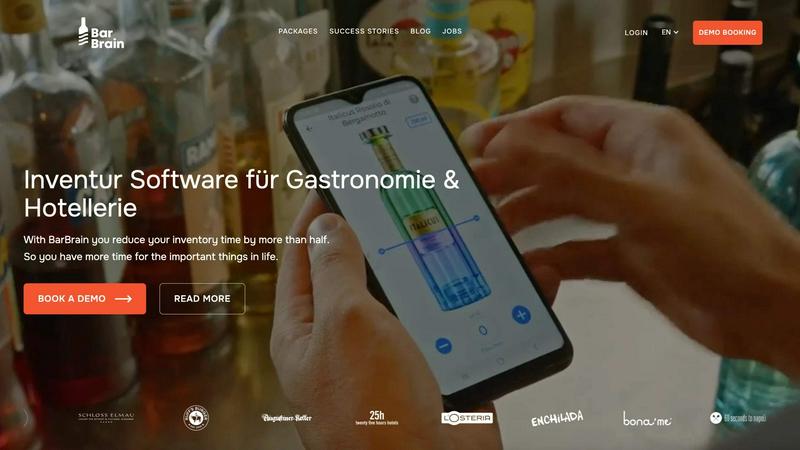
BarBrain cuts your bar and restaurant inventory time in half with fast, accurate digital counting.
Last updated: April 4, 2026

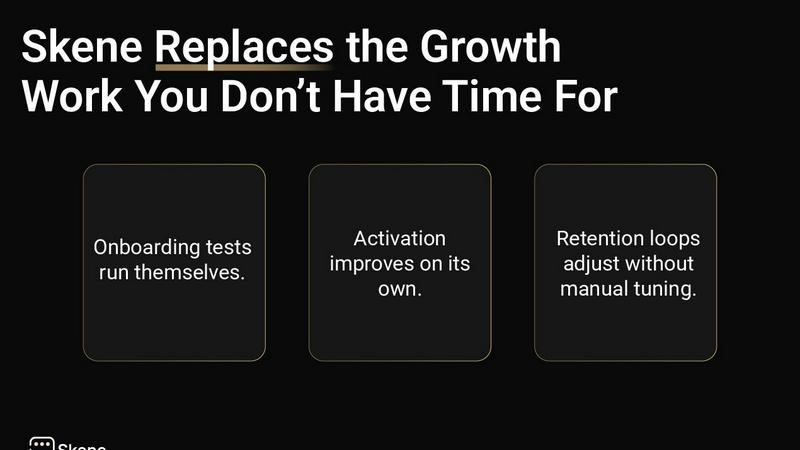
Skene turns your codebase into a growth engine you own and prompt.
Last updated: February 28, 2026
Visual Comparison
BarBrain
Skene
Feature Comparison
BarBrain
Lightning-Fast Digital Inventory Counting
BarBrain replaces clipboards and spreadsheets with a mobile app for iOS and Android, allowing staff to count stock directly on devices. The intuitive interface features a fill-level slider for partial bottles and open food items, enabling accurate recording with a single tap. Teams can count in parallel on multiple devices simultaneously, slashing inventory time by over 75% and eliminating hours of manual data entry and post-processing.
Automated Reporting & Cost Analytics
Immediately after each count, BarBrain automatically generates a comprehensive inventory report. This report provides clear insights into stock levels, usage, and, most importantly, calculates your exact cost of goods sold (COGS) for every menu item. This automation removes guesswork and manual calculation errors, delivering 100% reliable numbers to understand your true profitability and identify areas of waste or shrinkage instantly.
Extensive Pre-Loaded Product Catalog
Jumpstart your setup with access to a massive catalog of over 30,000 hospitality-specific products. This includes spirits, beers, wines, food items, and even housekeeping supplies. The extensive catalog simplifies adding your inventory, and BarBrain's support team is available to help customize and build your product list, ensuring a smooth and fast onboarding process tailored to your venue.
Centralized Supplier & Multi-Location Management
BarBrain consolidates all your supplier information and order history into one centralized platform, simplifying purchasing and price comparisons. For multi-unit operations, it provides a holistic overview across all locations, enabling standardized inventory procedures and consolidated reporting. This gives management a unified view of stock performance and costs enterprise-wide.
Skene
Codebase-Native Signal Detection
Skene connects directly to your repository and IDE, performing a deep analysis of your source code to automatically identify and derive growth signals. It scans your application's structure, framework, and logic to detect onboarding friction points, activation opportunities, and user journey patterns without requiring manual instrumentation or external tagging. This provides a foundational, accurate context layer for all subsequent growth automation, ensuring insights are derived from the actual product, not brittle external scripts.
Prompt-Driven Growth Implementation
Once your codebase is analyzed, you interact with Skene through natural language prompts to design and implement growth flows. You can instruct it to generate specific onboarding tours, lifecycle automations, or experiment configurations. This approach integrates growth work directly into a developer's natural workflow, allowing you to "ship growth" by simply describing the desired outcome in your terminal or AI agent, bypassing complex, point-and-click dashboard interfaces.
Self-Owning, Version-Controlled Experiments
All growth mechanisms created by Skene—such as user guides, analytics hooks, and engagement loops—are generated as actual code files in your project. You own this code, can review it, version it with Git, and modify it as needed. This eliminates the "black box" problem of third-party tools, ensures your growth layer remains performant and stable through deploys, and allows your AI agents to read and interact with your growth logic seamlessly.
Autonomous Growth Engine
Skene acts as a fully automated iteration engine for your product's user journeys. It doesn't just create static flows; it can run A/B tests and growth experiments autonomously. The platform tests different configurations, measures outcomes based on real user data, and automatically deploys the winning variations. This creates a self-optimizing system where your product's growth infrastructure improves continuously without manual intervention.
Use Cases
BarBrain
Independent Bars and Restaurants
For owner-operated establishments, BarBrain provides an affordable and powerful way to gain control over inventory without needing a dedicated manager. It automates the complex math of drink costing, helps identify pouring discrepancies, and provides clear data to negotiate with suppliers, directly protecting the owner's bottom line and saving valuable time that can be reinvested into service and guest experience.
Multi-Location Restaurant Groups
BarBrain enables corporate and regional managers to enforce consistent inventory practices across all sites. It streamlines reporting, allowing for easy comparison of performance between locations, identifying best practices, and pinpointing venues with higher-than-average waste or shrinkage. This centralized control is essential for scaling operations efficiently while maintaining margin integrity.
Hotels and Resorts
Hotels can leverage BarBrain for a full-scope F&B inventory across all their outlets - from the fine-dining restaurant and pool bar to room service and banquet kitchens. The software efficiently manages diverse product types, from beverages to perishable food, providing the detailed cost tracking necessary for complex hotel accounting and helping large operations cut down significantly on manual labor costs.
High-Volume Nightclubs and Venues
In fast-paced, high-turnover environments like nightclubs, speed and accuracy are paramount. BarBrain's parallel counting feature allows teams to complete inventory swiftly after closing, providing quick insights into the previous night's usage. Real-time shrinkage alerts help managers address potential issues like spillage or unauthorized pours immediately, safeguarding revenue in a cash-intensive business.
Skene
Automated User Onboarding
For products needing to guide new users to their "aha!" moment, Skene automatically analyzes key user flows in the code and generates contextual, in-product onboarding tours. It identifies where users get stuck and creates prompts to build guides that directly address those friction points, dramatically reducing time-to-value and manual tour maintenance while improving activation rates.
Lifecycle Automation & Retention
Teams can use Skene to build automated campaigns that re-engage users based on their behavior within the product. By understanding user actions from the codebase, Skene can prompt the creation of workflows for win-back campaigns, feature adoption nudges, or re-activation sequences, turning sporadic usage into consistent engagement and reducing churn.
Data-Driven Product Iteration
Developers and product managers can leverage Skene's deep code analysis to make informed decisions. The platform identifies underutilized features, detects popular paths, and highlights UX bottlenecks directly from the application logic. This provides a clean, actionable analytics layer rooted in the product itself, guiding prioritization for the next development cycle.
AI-Agent Integrated Development
In modern AI-powered development environments like Cursor, engineers can task their AI agents with growth work. Since Skene's context and outputs are pure code, an AI agent can be prompted to analyze the growth manifest, suggest improvements, or even implement new experiments based on the latest product changes, seamlessly blending growth into the AI-assisted development loop.
Overview
About BarBrain
BarBrain is a specialized inventory management platform engineered exclusively for the unique challenges of the hospitality industry. It solves the critical pain points faced by bar and restaurant owners who waste countless hours on manual stock counts, inaccurate spreadsheets, and generic software that doesn't understand their business. Unlike warehouse-focused tools, BarBrain is built from the ground up for venues that deal with pours, recipes, and perishable goods. It transforms a traditionally tedious and error-prone process into a streamlined, digital operation. The core value proposition is delivering precise, actionable data to protect profit margins. By enabling teams to count stock in minutes instead of hours, automatically calculating exact costs per drink and dish, and flagging waste in real-time, BarBrain gives operators the clarity they need to make smarter purchasing decisions, reduce shrinkage, and stop leaving money on the table. It is designed for everyone from single-location cocktail bars and bustling restaurants to multi-site hotel groups and restaurant chains, offering a clean, intuitive interface that requires no lengthy training.
About Skene
Skene is an AI-powered Product-Led Growth (PLG) infrastructure designed to automate growth for software products, specifically for indie developers, early-stage startups, and engineering teams. It tackles the core challenge of the immense time and resource drain required to manually build, test, and maintain user onboarding, activation, and retention flows. This work often falls on small teams who cannot afford dedicated growth engineers, forcing them to choose between building features and building growth mechanisms. Skene's solution is deeply technical and integrated: it connects directly to your codebase and IDE, analyzing your source code to automatically understand user flows and detect friction points. Instead of relying on external, brittle scripts and third-party widgets that break with updates and create data silos, Skene generates and runs growth experiments as code you own and version. This turns your product's growth layer into a programmable, self-optimizing part of your infrastructure. Its primary value proposition is allowing builders to ship and iterate on growth loops with the same tools, workflows, and sense of ownership they use to ship product features, effectively making growth a native component of the development process.
Frequently Asked Questions
BarBrain FAQ
How does BarBrain save so much time on inventory?
BarBrain digitizes the entire process. Instead of writing counts on paper and later transferring them to a spreadsheet for hours of calculations, your team counts directly into a mobile app. Features like parallel counting on multiple devices and the fill-level slider for partial items make counting faster and more accurate. The system automatically generates the final report and cost analysis, eliminating all manual post-count work, which typically saves over 75% of the total time.
Can BarBrain handle inventory for both food and beverages?
Absolutely. BarBrain is designed as a comprehensive F&B (Food and Beverage) inventory solution. Its extensive product catalog and flexible setup allow you to track everything from spirits, wine, and beer to all food ingredients, dry goods, and even non-food items like cleaning supplies. The fill-level slider is particularly useful for accurately tracking open and perishable food items.
Is BarBrain suitable for a business with only one location?
Yes, BarBrain is an excellent tool for single-location operations. It solves the universal problem of time-consuming manual inventory and lack of cost visibility. For independent owners, it acts as a powerful financial tool, providing the data needed to control costs and improve profitability without requiring a large team or complex infrastructure. The platform is scalable and can grow with your business.
What kind of support is offered during setup and use?
BarBrain offers dedicated support to ensure a smooth onboarding. This includes help with customizing your product catalog and setting up your account. The platform itself is designed to be intuitive, but the team is available to assist you at any time. Many customers start with a free demo to see the software in action and discuss their specific needs before committing.
Skene FAQ
How is Skene different from traditional customer experience software?
Traditional tools like Intercom or Appcues require manual, point-and-click tour creation, constant maintenance, and rely on brittle CSS selectors and UI overlays that break with every code deploy. Skene is fundamentally different: it reads your actual codebase to automatically understand your product and generate flows. When you push new code, Skene's analysis updates, and your growth mechanisms can adapt automatically, eliminating the maintenance nightmare.
How long does it take to set up?
Setup is designed to take less than 60 seconds. You simply connect your GitHub or GitLab repository with read-only access. Skene then automatically analyzes your codebase structure to generate the initial growth context and manifest. No initial code changes, API integrations, or complex configuration is required to get started.
Is my source code secure?
Absolutely. Security is a core principle. Skene only requires read-only access to your repository for analysis. This means we cannot push code or make changes. All analysis occurs in a secure, isolated environment. Your growth logic is generated as code you own and host, meaning your user data and business logic never leave your infrastructure.
What kind of analytics does Skene provide?
Skene provides an analytics dashboard focused on growth outcomes. It shows real-time user progress through key journeys, completion rates for onboarding steps, engagement metrics for features, and identifies specific bottlenecks causing drop-off. This allows you to track critical metrics like time-to-value and measure the direct impact of any growth experiments or product changes you ship.
Alternatives
BarBrain Alternatives
BarBrain is a specialized inventory management platform designed specifically for bars and restaurants. It falls into the hospitality productivity category, focusing on solving the unique challenges of tracking liquor, ingredients, and perishables to protect profit margins. Users often explore alternatives for various reasons. Common drivers include budget constraints, the need for different feature sets like integrated point-of-sale or accounting, or platform requirements such as a mobile-only solution. Some operations may also seek tools that scale differently for very small or exceptionally large multi-location groups. When evaluating other options, prioritize solutions built for hospitality, not generic warehouse software. Look for core capabilities like pour tracking, recipe costing, and waste analysis. The right tool should save time on counting, provide clear cost insights, and integrate smoothly with your existing workflow without a steep learning curve.
Skene Alternatives
Skene is an AI-powered PLG (Product-Led Growth) infrastructure tool in the productivity and management category. It automates growth by analyzing your codebase and running self-optimizing experiments, turning growth into a programmable layer of your product. Users often seek alternatives for various reasons. Some may need a different pricing model or a free tier to start. Others might require a platform that integrates with specific tools or offers a less technical, more visual interface for non-developers. The need for a different feature set, such as more traditional analytics or manual A/B testing tools, can also drive the search. When evaluating alternatives, consider your core needs. Look for a solution that aligns with your team's technical expertise, integrates smoothly with your existing stack, and scales with your product. The right tool should effectively reduce the manual burden of growth tasks, whether through automation, better insights, or streamlined workflows.