
Published on:
December 4, 2025
Pricing:
About Skene
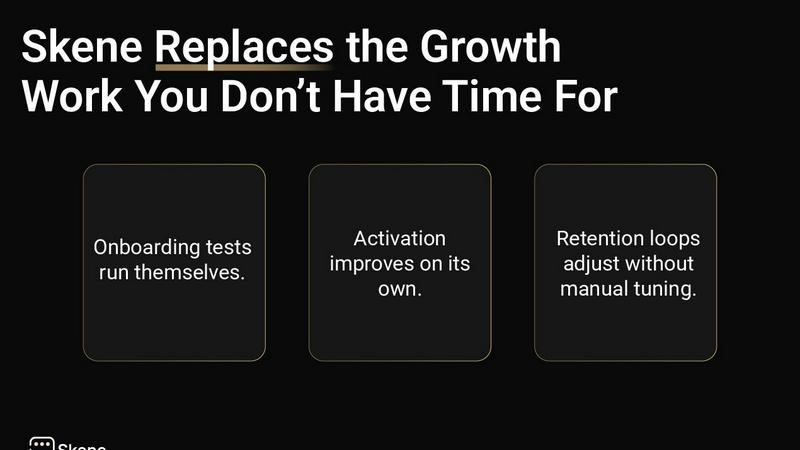
Skene is an AI-powered Product-Led Growth (PLG) infrastructure designed to automate growth for software products, specifically for indie developers, early-stage startups, and engineering teams. It tackles the core challenge of the immense time and resource drain required to manually build, test, and maintain user onboarding, activation, and retention flows. This work often falls on small teams who cannot afford dedicated growth engineers, forcing them to choose between building features and building growth mechanisms. Skene's solution is deeply technical and integrated: it connects directly to your codebase and IDE, analyzing your source code to automatically understand user flows and detect friction points. Instead of relying on external, brittle scripts and third-party widgets that break with updates and create data silos, Skene generates and runs growth experiments as code you own and version. This turns your product's growth layer into a programmable, self-optimizing part of your infrastructure. Its primary value proposition is allowing builders to ship and iterate on growth loops with the same tools, workflows, and sense of ownership they use to ship product features, effectively making growth a native component of the development process.
Features of Skene
Codebase-Native Signal Detection
Skene connects directly to your repository and IDE, performing a deep analysis of your source code to automatically identify and derive growth signals. It scans your application's structure, framework, and logic to detect onboarding friction points, activation opportunities, and user journey patterns without requiring manual instrumentation or external tagging. This provides a foundational, accurate context layer for all subsequent growth automation, ensuring insights are derived from the actual product, not brittle external scripts.
Prompt-Driven Growth Implementation
Once your codebase is analyzed, you interact with Skene through natural language prompts to design and implement growth flows. You can instruct it to generate specific onboarding tours, lifecycle automations, or experiment configurations. This approach integrates growth work directly into a developer's natural workflow, allowing you to "ship growth" by simply describing the desired outcome in your terminal or AI agent, bypassing complex, point-and-click dashboard interfaces.
Self-Owning, Version-Controlled Experiments
All growth mechanisms created by Skene—such as user guides, analytics hooks, and engagement loops—are generated as actual code files in your project. You own this code, can review it, version it with Git, and modify it as needed. This eliminates the "black box" problem of third-party tools, ensures your growth layer remains performant and stable through deploys, and allows your AI agents to read and interact with your growth logic seamlessly.
Autonomous Growth Engine
Skene acts as a fully automated iteration engine for your product's user journeys. It doesn't just create static flows; it can run A/B tests and growth experiments autonomously. The platform tests different configurations, measures outcomes based on real user data, and automatically deploys the winning variations. This creates a self-optimizing system where your product's growth infrastructure improves continuously without manual intervention.
Use Cases of Skene
Automated User Onboarding
For products needing to guide new users to their "aha!" moment, Skene automatically analyzes key user flows in the code and generates contextual, in-product onboarding tours. It identifies where users get stuck and creates prompts to build guides that directly address those friction points, dramatically reducing time-to-value and manual tour maintenance while improving activation rates.
Lifecycle Automation & Retention
Teams can use Skene to build automated campaigns that re-engage users based on their behavior within the product. By understanding user actions from the codebase, Skene can prompt the creation of workflows for win-back campaigns, feature adoption nudges, or re-activation sequences, turning sporadic usage into consistent engagement and reducing churn.
Data-Driven Product Iteration
Developers and product managers can leverage Skene's deep code analysis to make informed decisions. The platform identifies underutilized features, detects popular paths, and highlights UX bottlenecks directly from the application logic. This provides a clean, actionable analytics layer rooted in the product itself, guiding prioritization for the next development cycle.
AI-Agent Integrated Development
In modern AI-powered development environments like Cursor, engineers can task their AI agents with growth work. Since Skene's context and outputs are pure code, an AI agent can be prompted to analyze the growth manifest, suggest improvements, or even implement new experiments based on the latest product changes, seamlessly blending growth into the AI-assisted development loop.
Frequently Asked Questions
How is Skene different from traditional customer experience software?
Traditional tools like Intercom or Appcues require manual, point-and-click tour creation, constant maintenance, and rely on brittle CSS selectors and UI overlays that break with every code deploy. Skene is fundamentally different: it reads your actual codebase to automatically understand your product and generate flows. When you push new code, Skene's analysis updates, and your growth mechanisms can adapt automatically, eliminating the maintenance nightmare.
How long does it take to set up?
Setup is designed to take less than 60 seconds. You simply connect your GitHub or GitLab repository with read-only access. Skene then automatically analyzes your codebase structure to generate the initial growth context and manifest. No initial code changes, API integrations, or complex configuration is required to get started.
Is my source code secure?
Absolutely. Security is a core principle. Skene only requires read-only access to your repository for analysis. This means we cannot push code or make changes. All analysis occurs in a secure, isolated environment. Your growth logic is generated as code you own and host, meaning your user data and business logic never leave your infrastructure.
What kind of analytics does Skene provide?
Skene provides an analytics dashboard focused on growth outcomes. It shows real-time user progress through key journeys, completion rates for onboarding steps, engagement metrics for features, and identifies specific bottlenecks causing drop-off. This allows you to track critical metrics like time-to-value and measure the direct impact of any growth experiments or product changes you ship.
Explore more in this category:
Similar to Skene

@fuck.it - email with attitude
Private email. Pure. Secure. Exclusive. No ads, no tracking, no data selling. GDPR compliant, EU-hosted.
Ecommerce Data API
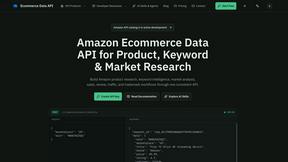
Amazon research data APIs for developers, sellers and AI agents. Integrate product, keyword and market research through REST APIs and MCP.

Novastart
Apps and files on an infinite canvas where people and AI agents work together.
SightRadar
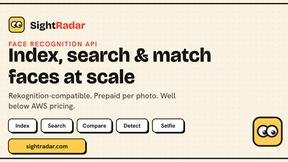
Face recognition API, a drop-in replacement for AWS Rekognition. Index, search, compare and detect faces, billed per photo with no subscription.

Notes Calculator
A notepad calculator that reads plain text and gives instant answers as you type, free on Mac, iOS, Windows, Linux, Android and Web.

CubexSoft EML Converter
Convert EML Files to PST, PDF, EML, MBOX, CSV, Gmail, IMAP, Thunderbird, and more.
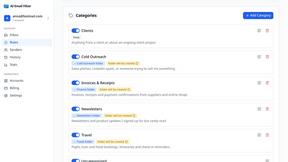
AI Email Filter
AI Email Filter sorts incoming mail into folders using plain-language prompts you write. Works with any IMAP mailbox; bring your own LLM if you want.