Amovera vs SaaSFame
Side-by-side comparison to help you choose the right tool.

Amovera
All-in-one wedding planner. No hidden fees.

SaaSFame
SaaSFame helps you discover and compare over 200 top SaaS products to streamline and elevate your business success.
Last updated: March 1, 2026
Visual Comparison
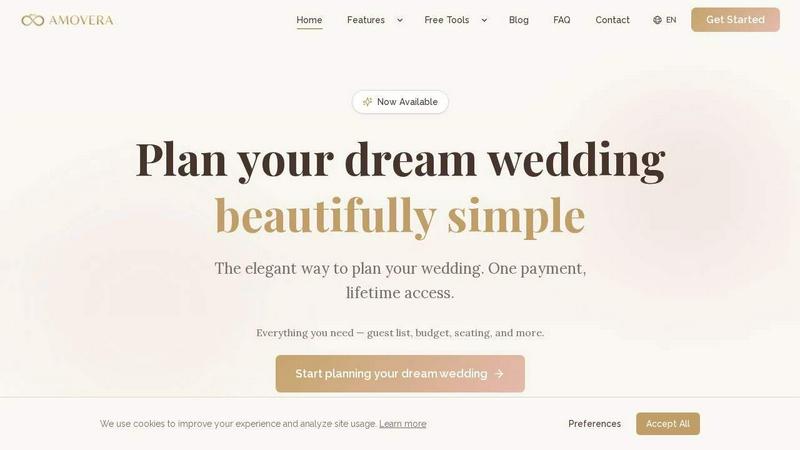
Amovera
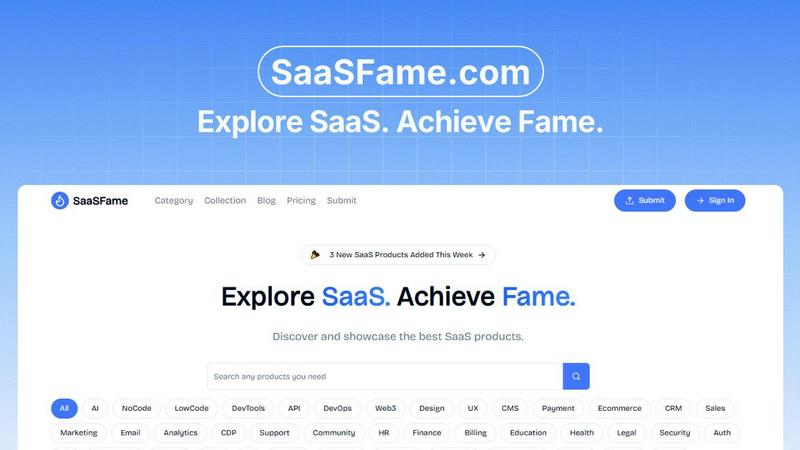
SaaSFame
Overview
About Amovera
Amovera is a wedding planning tool that keeps everything in one place. Guest list and RSVP management, seating chart builder, budget tracker, moodboard, vendor contacts and task lists, all without switching between apps or spreadsheets.
It works for two people at the same time, so both partners can plan together without stepping on each other's toes.
Most free wedding tools make money by selling your data to vendors. Amovera does not. You pay once and get lifetime access with no subscriptions, no upsells and no spam from caterers.
Available in English and German, building more languages soon.
One payment. Lifetime access. 60-day money-back guarantee.
About SaaSFame
SaaSFame.com is a pioneering platform designed to bridge the gap between users and a diverse collection of Software as a Service (SaaS) products. It caters to a broad audience, including startup founders eager to showcase their innovative solutions and business professionals searching for the right tools to enhance their productivity. By acting as a curated directory, SaaSFame simplifies the daunting task of finding effective software solutions. Users can easily navigate through a wide range of categories—ranging from AI and marketing to productivity tools and customer relationship management. The platform is not only user-friendly but also feature-rich, enabling users to discover and utilize tools that can significantly streamline their operations. SaaSFame's primary value proposition lies in its commitment to helping users identify reliable software that meets their specific needs, ultimately fostering greater efficiency and improved outcomes in both personal and professional contexts.