Amovera vs Skene
Side-by-side comparison to help you choose the right tool.

Amovera
All-in-one wedding planner. No hidden fees.

Skene turns your codebase into a growth engine you own and prompt.
Last updated: February 28, 2026
Visual Comparison
Amovera

Skene
Overview
About Amovera
Amovera is a wedding planning tool that keeps everything in one place. Guest list and RSVP management, seating chart builder, budget tracker, moodboard, vendor contacts and task lists, all without switching between apps or spreadsheets.
It works for two people at the same time, so both partners can plan together without stepping on each other's toes.
Most free wedding tools make money by selling your data to vendors. Amovera does not. You pay once and get lifetime access with no subscriptions, no upsells and no spam from caterers.
Available in English and German, building more languages soon.
One payment. Lifetime access. 60-day money-back guarantee.
About Skene
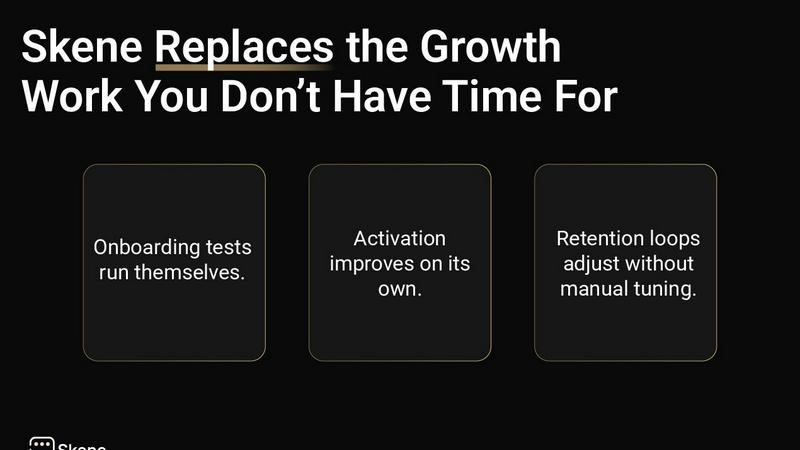
Skene is an AI-powered Product-Led Growth (PLG) infrastructure designed to automate growth for software products, specifically for indie developers, early-stage startups, and engineering teams. It tackles the core challenge of the immense time and resource drain required to manually build, test, and maintain user onboarding, activation, and retention flows. This work often falls on small teams who cannot afford dedicated growth engineers, forcing them to choose between building features and building growth mechanisms. Skene's solution is deeply technical and integrated: it connects directly to your codebase and IDE, analyzing your source code to automatically understand user flows and detect friction points. Instead of relying on external, brittle scripts and third-party widgets that break with updates and create data silos, Skene generates and runs growth experiments as code you own and version. This turns your product's growth layer into a programmable, self-optimizing part of your infrastructure. Its primary value proposition is allowing builders to ship and iterate on growth loops with the same tools, workflows, and sense of ownership they use to ship product features, effectively making growth a native component of the development process.