
Interactive Circle of Fifths
Visualize and master music theory effortlessly with our Interactive Circle of Fifths for scales, chords, and.
Visit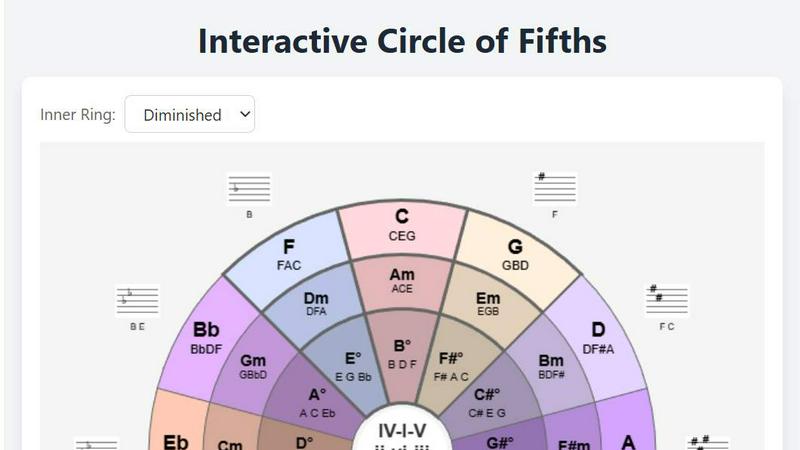
About Interactive Circle of Fifths
The Interactive Circle of Fifths is a revolutionary, web-based music theory tool crafted to simplify the intricate relationships among keys, chords, and scales. By transforming the traditional, static circle into a lively and engaging learning platform, this tool caters to musicians at all levels. Beginners can grasp chord progressions, while experienced composers can discover new harmonic ideas. The main value proposition lies in its ability to make complex music theory concepts visually accessible and audibly engaging. Instead of relying on rote memorization, users click, hear, and observe the connections between musical elements in real-time. Featuring an interactive circle with specialized visualizers for piano and guitar, it effectively links theoretical understanding with practical application. Whether you are composing, improvising, or seeking to understand the harmonic relationships of chords, this tool offers immediate feedback and structured pathways to enhance your musical journey.
Features of Interactive Circle of Fifths
Interactive Circle
The core feature of the Interactive Circle of Fifths is its dynamic, clickable visual representation of the circle. Users can engage with different keys, chords, and scales, allowing for an immersive experience that encourages exploration and experimentation. This interactivity demystifies music theory and helps users understand how various elements relate to one another.
Instrument-Specific Visualizers
The tool includes dedicated visualizers for piano and guitar, which display chord shapes and scale patterns unique to each instrument. This feature allows users to visualize how chords and scales translate into finger placements, bridging the gap between theoretical knowledge and practical execution.
Harmonized Scale Panel
With the Harmonized Scale panel, users can explore how different scales are constructed and their related chords. This feature enhances understanding of diatonic harmony, making it easier for musicians to create progressions that sound cohesive and pleasing. It serves as a practical guide for songwriters and composers.
Chord Sequencer
The Chord Sequencer allows users to experiment with different chord progressions in real-time. Musicians can select chords from the circle and hear them in context, facilitating a deeper understanding of how harmonic movement works. This interactive approach encourages creativity and helps users discover new musical ideas.
Use Cases of Interactive Circle of Fifths
Learning Music Theory
Beginners can utilize the Interactive Circle of Fifths to learn the basics of music theory in a hands-on manner. By engaging with the circle, they can understand key signatures, chord relationships, and scale structures without feeling overwhelmed by traditional methods.
Songwriting Assistance
Songwriters can leverage the tool to find new chord progressions and harmonies for their compositions. By experimenting with the Chord Sequencer and harmonized scales, they can create unique and interesting musical pieces, gaining inspiration from the immediate auditory feedback.
Improvisation Practice
Musicians looking to improve their improvisational skills can use the Interactive Circle to explore different scales and chords in real-time. The auditory feedback helps users identify which notes work well over specific chords, enhancing their ability to improvise fluidly and confidently.
Teaching Resource
Music educators can incorporate the Interactive Circle of Fifths into their teaching curriculum to make lessons more engaging. The tool’s interactive features provide a visual and auditory way to explain complex concepts, making it easier for students to grasp and retain information.
Frequently Asked Questions
What is the Interactive Circle of Fifths?
The Interactive Circle of Fifths is a web-based music theory tool that transforms the traditional circle of fifths into an interactive, engaging learning experience for musicians of all levels.
How does it help beginners?
For beginners, the tool simplifies complex music theory concepts by allowing them to explore key relationships, chords, and scales interactively. This hands-on approach fosters understanding without the need for rote memorization.
Can I use it for different instruments?
Yes, the Interactive Circle of Fifths includes instrument-specific visualizers for both piano and guitar, allowing users to see how chords and scales apply to their chosen instrument, enhancing their practical skills.
Is it suitable for advanced musicians?
Absolutely. Seasoned musicians can utilize the tool for harmonic exploration, discovering fresh ideas for composition and improvisation. Its intuitive interface provides immediate feedback that can inspire creativity.
Explore more in this category:
Similar to Interactive Circle of Fifths


imgtxtapp.laviolab.com
imgtxtapp.laviolab.com is a Telegram-based image-to-text converter that turns photos, screenshots, scanned documents into editable text

PythonExercise.com
An interactive coding platform featuring bite-sized Python exercises designed to build real coding skills through hands-on practice.

PracticeSIEM
PracticeSIEM.com is an interactive, browser-based hands-on cybersecurity learning platform designed for Security Operations Center (SOC) analysts.

SQLCrab
SQLCrab (sqlcrab.com) is an interactive, browser-based SQL learning platform that lets you practice database queries directly in your browser.



Wordy
Learn languages with real movie and TV show clips.