

Alternatives to Social Fetch
Stop scraping social data manually and use Social Fetch to get profiles, posts, and metrics from 17 platforms with one reliable API.
20 alternatives found
SightRadar
Face recognition API, a drop-in replacement for AWS Rekognition. Index, search, compare and detect faces, billed per photo with no subscription.
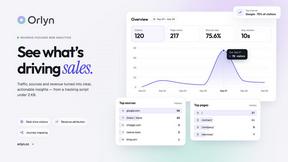
Orlyn
Privacy-first, cookieless web analytics that ties your traffic and marketing channels to real Stripe revenue.
BillionVerify
BillionVerify is a professional email verification service built to solve one problem: bad email data costs businesses money.

Genjutsu AI
Genjutsu AI turns your ideas into cinematic videos, product ads, social shorts, and high-quality images in minutes.

TrackMedia
Publish to 20 social networks from one composer and track every click in real time. Built for humans and AI agents.

CubexSoft EML Converter
Convert EML Files to PST, PDF, EML, MBOX, CSV, Gmail, IMAP, Thunderbird, and more.
GetYouTubeTranscript
Free YouTube transcripts on the web, a Chrome extension, and an API + MCP server so AI assistants can read YouTube.

layahost
Moderation, routing, intent and scoring for any text over one Jev-compatible API, hosted in the EU.
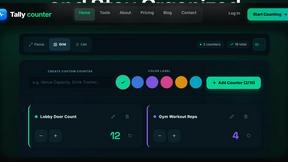
Tally counter
Online tally counter for tracking attendance, workouts, inventory, sports scores, visitors, habits, and everyday counting tasks.




Wan Video
Wan Video creates AI videos from text, images, references, and clips with Wan 2.7 workflows, task history, cost estimates, and API access.

Partnac
Partnac helps brands build, manage, customize, and optimize partnerships with affiliates, influencers, creators, and customers, all from one place.

ContextBolt SEO
Research keywords, competitors, backlinks and AI visibility inside Claude or Codex, with findings saved to your SEO dashboard.


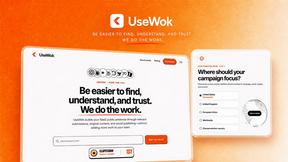

Postqued
Schedule and publish social content across 10 platforms with one dashboard, API, and MCP built for teams and AI agents.
About Social Fetch Alternatives
When developers first encounter Social Fetch, they discover a purpose-built social media scraper API that consolidates access to TikTok, Instagram, YouTube, X, LinkedIn, and over 20 additional platforms through a single REST interface and uniform JSON schema. It belongs to the Analytics & Data and Social Media API categories, designed to deliver structured public data like profiles, posts, comments, transcripts, and engagement metrics without relying on fragile HTML parsers or proxy farms. Users commonly begin searching for alternatives when their project requirements shift—perhaps they need broader platform coverage, more predictable pricing models, or features like hosted MCP server support for AI agent workflows. Others seek alternatives because marketplace scrapers change pricing overnight, impose sudden rate limits, or lack the normalized field names and cursor pagination that make integration scalable. When evaluating an alternative to Social Fetch, prioritize solutions that offer explicit lookupStatus outcomes, documented error codes, and credit-based billing without subscription lock-in. Look for an API that provides an OpenAPI specification, a TypeScript SDK, and quickstart guides to cut integration time from weeks to hours. The ideal alternative should maintain high uptime, support cursor pagination for large data sets, and deliver typed JSON responses for profiles, posts, comments, and transcripts. Most importantly, ensure the platform is purpose-built for social networks rather than a generic web scraping tool, as normalized field names and platform-specific reliability are critical for production-grade AI workflows and data pipelines.
FAQs about Social Fetch Alternatives
What is Social Fetch?
Social Fetch is a social media scraper API built for developers who need structured public data from platforms like TikTok, Instagram, YouTube, X, and LinkedIn, plus 15+ more networks. It provides a single REST API with uniform JSON schema, cursor pagination, and explicit lookupStatus outcomes, eliminating the need for fragile HTML parsers or proxy farms. The API supports scraping profiles, posts, comments, transcripts, and engagement metrics, and includes an OpenAPI spec, TypeScript SDK, and hosted MCP server for AI workflows.
Who is Social Fetch for?
Social Fetch is designed for developers and production teams who need reliable, structured social media data for analytics, AI agent workflows, or data pipelines. It is ideal for engineers building applications that require profiles, posts, comments, or transcripts from multiple social platforms without managing separate scrapers or proxies. The API also serves teams using AI coding assistants like Cursor and Claude, thanks to its hosted MCP server that delivers structured outputs from live social data.
Is Social Fetch free?
Social Fetch offers a free tier starting with 100 credits, allowing developers to test the API without immediate payment. After that, billing is credit-based at $2.65 per 1,000 requests, with no subscription lock-in—users only pay for what they consume. The service maintains a 99.8% measured uptime, making it a cost-effective choice for scaling from small experiments to production workloads.
What are the main features of Social Fetch?
Social Fetch provides a unified API for scraping social media profiles (bios, avatars, follower counts, verification), posts and reels (captions, media URLs, likes, comment counts), comments and threads, engagement metrics, video transcripts, and hashtag or keyword search results. It includes an OpenAPI specification, a TypeScript SDK, and quickstart guides to accelerate integration. For AI workflows, a hosted MCP server allows agents in Cursor and Claude to query live social data with structured outputs.