
HiAPI
Stop juggling multiple AI model APIs and storage systems; HiAPI unifies image, video, and audio generation into one call with persistent artifacts.
Visit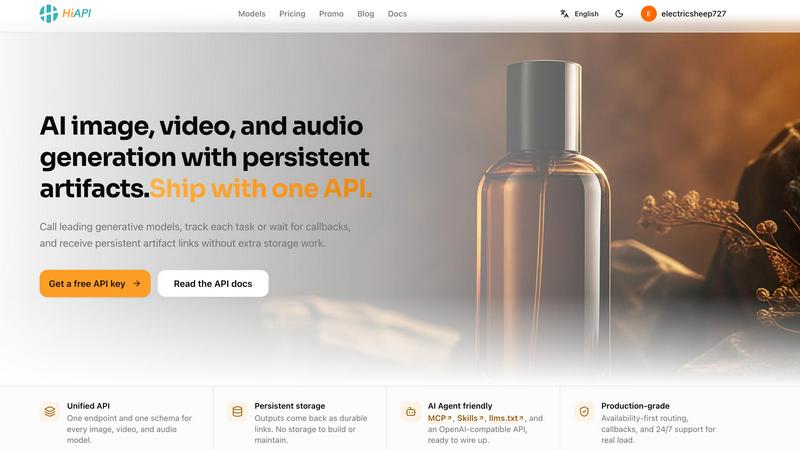
About HiAPI
HiAPI is a developer-first AI API platform that solves a critical challenge for teams building generative AI applications: the complexity of managing multiple AI model providers. Instead of juggling separate API keys, billing accounts, authentication schemes, and output storage solutions for each model, HiAPI gives developers a single point of integration. With one API key and one unified endpoint, you can access leading models for image generation, video creation, audio synthesis, and text generation from providers like OpenAI, ByteDance, Black Forest Labs, and MiniMax. The platform is built around a persistent task-based architecture that eliminates the need to manage file storage separately. Every output comes back as a durable, low-cost artifact link that remains accessible without additional infrastructure work. HiAPI is designed for production workloads, offering availability-first routing, webhook callbacks, and 24/7 support. The platform also embraces the AI agent ecosystem, providing MCP tools, Skills, and an llms.txt file so that both human developers and autonomous agents can discover, call, and compose the API seamlessly. Whether you are building a content generation pipeline, an AI-powered design tool, or an agentic workflow, HiAPI removes the integration friction and lets you ship faster with predictable pay-as-you-go pricing.
Features of HiAPI
Unified API with One Schema
HiAPI eliminates the chaos of integrating with multiple AI model providers by offering a single endpoint and a consistent request schema for every image, video, and audio model. You pass the base model name in the request, and the platform handles the provider-specific translation internally. This means your codebase remains clean and your integration logic stays simple, even as you switch between models or add new ones. The same curl command structure works for GPT Image 2, Seedream 5.0 Pro, FLUX 1.1 Pro, or MiniMax Music 2.6, drastically reducing development time and maintenance burden.
Persistent Artifact Storage
One of the biggest hidden costs in AI application development is managing output files. Generated images, videos, and audio clips need to be stored, served, and kept accessible. HiAPI solves this with persistent artifact storage built directly into the API. When you set the storage parameter to persistent, every output returns a durable link that you can use immediately in your application. There is no need to build your own storage layer, set up CDN caching, or manage file expiration. This feature alone can save weeks of backend development and ongoing infrastructure costs.
AI Agent Ready Architecture
HiAPI is built from the ground up to work with the modern AI agent ecosystem. The platform exposes MCP (Model Context Protocol) tools that agents can discover and call automatically. It provides reusable Skills, which are pre-written agent instructions for common generation workflows. And it includes an llms.txt file that agents can read to understand the full API surface. This means you can drop HiAPI into agents running on Claude, Cursor, Codex, or any MCP-compatible runtime, and the agent can immediately start generating images, videos, or audio without manual integration steps.
Production-Grade Task Lifecycle
Every generation request in HiAPI follows a robust, asynchronous task lifecycle that is designed for real-world production loads. When you submit a job, you get back a task ID immediately. You can poll for status, or better yet, set up a callback URL to receive a webhook notification when the task completes. The API supports idempotency keys, so retries do not create duplicate tasks. Availability-first routing means that if one provider endpoint is slow or down, the platform can route your request to an alternative path. This architecture handles high concurrency, network failures, and scaling gracefully.
Use Cases of HiAPI
AI-Powered Content Creation Platform
Imagine building a platform where users can generate marketing images, social media videos, and background music from a single interface. With HiAPI, you integrate once and offer multiple generative capabilities. A user types a prompt for a product photo, and the platform calls Seedream 5.0 Pro for high-quality image generation with sharp text rendering. Another user wants a short video ad, and the platform routes to Seedance 2.0 for cinematic video with native audio. The persistent artifact links let you display results immediately without building any storage infrastructure. The unified billing means you track all usage under one account.
Automated Design Pipeline for E-Commerce
E-commerce teams often need to generate thousands of product images, lifestyle shots, and promotional videos at scale. HiAPI enables an automated pipeline where a backend service submits image generation tasks in batches, receives callbacks on completion, and stores the artifact links directly in the product database. Using the idempotency key feature ensures that retries during network blips do not create duplicate images. The pay-as-you-go pricing means you only pay for what you generate, making it cost-effective for both small catalog updates and massive seasonal campaigns.
AI Agent for Creative Brainstorming
A creative agency deploys an AI agent that helps designers brainstorm visual concepts. The agent uses HiAPI's MCP tools to automatically generate mood boards, video storyboards, and audio samples based on natural language requests. The designer says, "Show me three different visual styles for this product launch," and the agent calls GPT Image 2, FLUX 1.1 Pro, and Nano Banana 2 in parallel. The agent then presents the results with clickable artifact links. The llms.txt integration means the agent can be set up in minutes without custom coding.
Interactive Media Application with Real-Time Feedback
A mobile app lets users generate custom avatars, short animations, and soundtracks. The app uses HiAPI's task-based API with callbacks to provide a responsive user experience. When a user submits a request, the app shows a loading state and then displays the result as soon as the callback fires. The persistent storage means the generated media is available for sharing and reuse without the app needing to host files. The single API key and unified billing simplify the backend architecture and reduce operational overhead for the development team.
Frequently Asked Questions
What AI models are available on HiAPI?
HiAPI provides access to a curated selection of leading generative AI models. For image generation and editing, you can use GPT Image 2 from OpenAI, Seedream 5.0 Pro from ByteDance, FLUX 1.1 Pro from Black Forest Labs, and Nano Banana 2 (Google Gemini Flash image model). For video generation, Seedance 2.0 from ByteDance offers cinematic video with native audio and multi-shot consistency. For audio, MiniMax Music 2.6 can turn prompts and lyrics into complete songs with an instrumental mode. The platform continuously adds new models, so you can check the Models page for the latest additions.
How does the unified API and task system work?
You submit a generation request by sending a POST request to the /v1/tasks endpoint with your API key, the model name, and the input parameters. The API immediately returns a task ID. You can then either poll the task status or set up a callback URL to receive a webhook notification when the generation is complete. The response includes a persistent artifact link to the generated output. The system supports idempotency keys so that if you retry the same request, it does not create duplicate tasks. This task lifecycle is the same for image, video, and audio generation.
How do I integrate HiAPI with an AI agent like Claude or Cursor?
HiAPI supports three integration paths for AI agents. First, you can use the Remote MCP tools, which the agent can discover and call automatically. Second, you can use Skills, which are reusable agent instructions that tell the agent how to perform common workflows like image generation or video creation. Third, you can provide the agent with the llms.txt prompt, which contains the full API documentation. The agent reads it, understands the available models and endpoints, and then chooses the best integration path. This works with Claude, Cursor, Codex, and other MCP-compatible agent runtimes.
What is persistent storage and how does it work?
Persistent storage is a feature that automatically saves all generated outputs as durable, low-cost artifact links. When you set the storage parameter to persistent in your API request, HiAPI stores the resulting image, video, or audio file and returns a URL that you can use directly in your application. You do not need to build your own file storage system, set up a CDN, or manage file expiration. The links remain accessible for as long as you need them. This eliminates a significant amount of backend development work and ongoing infrastructure costs.
How do I get started and what is the free credit offer?
You can get started by signing up on the HiAPI website to receive a free API key. New users receive up to $1 in free credits to test the platform and explore different models. Once you have your API key, you can immediately start making requests using the provided curl, JavaScript, or Python examples in the documentation. The platform uses pay-as-you-go pricing, so you only pay for what you use after the free credits are consumed. Each model page lists its price upfront, allowing you to estimate costs before integrating.
Similar to HiAPI

ColorBestie
AI color previews and marker color suggestions for coloring pages.

Nano Banana 2.1
A fast, simple image studio powered by Nano Banana 2.1. Create and edit high-quality images with accurate details, readable text, consistent character
AIPetGen
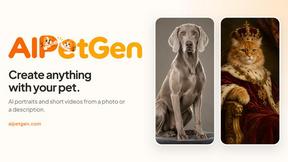
AIPetGen turns a photo of your dog, cat, or other pet, or a written description, into a new picture or a short animation.

Image to Layers AI
Turn any image into editable transparent PNG/PSD layers with AI
Genjutsu AI
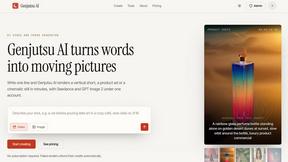
Genjutsu AI turns your ideas into cinematic videos, product ads, social shorts, and high-quality images in minutes.
AI Album Cover Maker
Create release-ready album covers from a prompt or photo. Generate, refine, and export art for singles, EPs, mixtapes, and playlists.
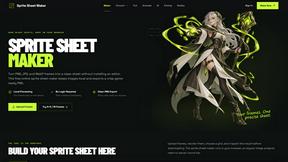
Sprite Sheet Maker
A free browser-based toolkit for creating, cutting, converting, and previewing sprite sheet animations.
AIEnhancer
Enhance photos, create images, and generate videos with flexible AI workflows and creative effects.