
OpenMark AI
OpenMark AI benchmarks over 100 LLMs on your specific task to find the best model for cost, speed, and quality.
Visit
About OpenMark AI
Choosing the right large language model (LLM) for your AI feature is a high-stakes gamble. Relying on marketing benchmarks or testing one model at a time leaves you guessing about real-world performance, true cost, and output consistency. This uncertainty leads to shipping features that are either too expensive, unreliable, or underperform. OpenMark AI solves this critical pre-deployment challenge. It is a hosted web application designed for developers and product teams to perform task-level LLM benchmarking. You simply describe your specific task in plain language—be it data extraction, translation, or agent routing—and run the same prompts against a vast catalog of over 100 models in a single session. The platform provides side-by-side comparisons using real API calls, not cached data, measuring scored quality, cost per request, latency, and critically, stability across repeat runs to show variance. This means you see which model consistently delivers quality for your unique need at a sustainable cost, eliminating guesswork. With a hosted credit system, you bypass the hassle of configuring multiple API keys, making professional-grade benchmarking accessible without setup. OpenMark AI is built for those who care about cost efficiency (quality relative to price) and consistency, ensuring you deploy with confidence.
Features of OpenMark AI
Plain Language Task Description
You don't need to be a prompt engineering expert to start benchmarking. OpenMark AI allows you to describe the task you want to test in simple, natural language. The platform then configures the benchmark based on your description, making advanced LLM evaluation accessible to developers, product managers, and teams without deep technical expertise in model fine-tuning or complex setup procedures.
Multi-Model Comparison in One Session
Instead of manually testing models one by one across different platforms, OpenMark AI lets you run your identical prompt against dozens of models simultaneously. This side-by-side testing environment provides an immediate, apples-to-apples comparison, saving hours of manual work and providing clear, actionable insights into which model performs best for your specific use case.
Real Cost & Performance Metrics
The platform goes beyond simple accuracy scores. It executes real API calls to each model and reports back the actual cost per request, latency, and a scored quality metric based on your task. This gives you a complete picture of the trade-offs between speed, expense, and effectiveness, allowing for true cost-efficiency calculations before you commit to an API.
Stability and Variance Analysis
A single, lucky output from a model is misleading. OpenMark AI runs your task multiple times for each model to measure consistency. The results show variance across these repeat runs, highlighting which models produce stable, reliable outputs and which ones are unpredictable. This is crucial for deploying production features that users can depend on.
Use Cases of OpenMark AI
Pre-Deployment Model Selection
Before integrating an LLM into a new chatbot, content generation feature, or data processing pipeline, teams can use OpenMark AI to validate which model from the vast available catalog best fits their workflow. This ensures the chosen model aligns with required quality, cost constraints, and performance benchmarks, reducing the risk of post-launch failures or budget overruns.
Cost Optimization for Existing Features
For teams already using an LLM API, OpenMark AI serves as a tool for periodic cost-performance reviews. By benchmarking their current task against newer or alternative models, they can identify if a different provider offers comparable quality at a lower cost or better performance for the same budget, leading to significant long-term savings.
Evaluating Model Consistency for Critical Tasks
When building applications where output reliability is non-negotiable—such as legal document analysis, medical information extraction, or financial summarization—testing for consistency is key. OpenMark AI's variance analysis helps teams disqualify models with high output fluctuation and select those that deliver dependable results every time.
Prototyping and Research for AI Products
Researchers and product innovators exploring new AI capabilities can use OpenMark AI to rapidly prototype ideas. By quickly testing how different models handle a novel task like complex agent routing or multimodal analysis, they can gather data on feasibility and performance without investing in extensive infrastructure or API integrations upfront.
Frequently Asked Questions
How does OpenMark AI differ from standard model leaderboards?
Standard leaderboards often use generic, one-size-fits-all benchmarks (like MMLU or HellaSwag) that may not reflect your specific task. They also typically show "best-case" or cached results. OpenMark AI requires you to describe your actual task, runs fresh API calls against models in real-time, and measures metrics critical for deployment: your task's quality score, actual API cost, latency, and consistency across multiple runs.
Do I need my own API keys to use OpenMark AI?
No, one of the core conveniences of OpenMark AI is that it operates on a hosted credit system. You purchase credits through OpenMark and the platform manages the API calls to providers like OpenAI, Anthropic, and Google on your behalf. This eliminates the need to sign up for, configure, and manage multiple API keys just to run a comparison.
What kind of tasks can I benchmark with OpenMark AI?
You can benchmark virtually any task you would use an LLM for. The platform is designed for task-level evaluation, including but not limited to text classification, translation, data extraction from documents, question answering, content generation, code explanation, sentiment analysis, and testing components of Retrieval-Augmented Generation (RAG) or agentic workflows.
How does OpenMark AI measure the "quality" of a model's output?
Quality scoring is based on the specific task you define. The platform uses automated evaluation methods tailored to your benchmark's goal. This could involve checking for correctness against a defined answer, using a more powerful LLM as a judge to grade responses, or employing other metrics like semantic similarity. The method is configured to align with your success criteria.
Pricing of OpenMark AI
OpenMark AI offers a free plan to get started, which includes a sign-in bonus of 50 free credits for benchmarking. Beyond the free tier, paid plans are available to suit different usage levels. Specific plan details, tier limits, and credit pricing are managed within the application's billing section. Users can upgrade their plan and purchase additional credits directly through the in-app interface to continue running benchmarks at scale.
Similar to OpenMark AI
Egmatic
No-code 2D game editor: visual node logic, drag-and-drop scenes, live preview. Exports to Windows, macOS, Linux, Android, iOS, Web.
laya.tools
A free directory of 950+ projects built on Laya, the open-source decision model. Updated daily.
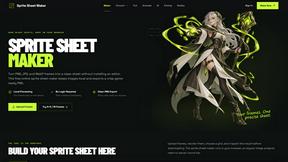
Sprite Sheet Maker
A free browser-based toolkit for creating, cutting, converting, and previewing sprite sheet animations.
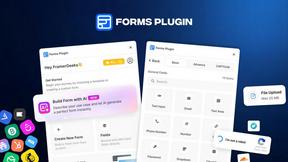
Forms Plugin
The #1 Native Form Builder Plugin for Framer - No Code, No Embeds, No External Platforms.

Free Gemini Omni
Create, remix, and edit cinematic AI videos online with Free Gemini Omni using text, image, audio, and video prompts.